
Last updated November 2, 2026
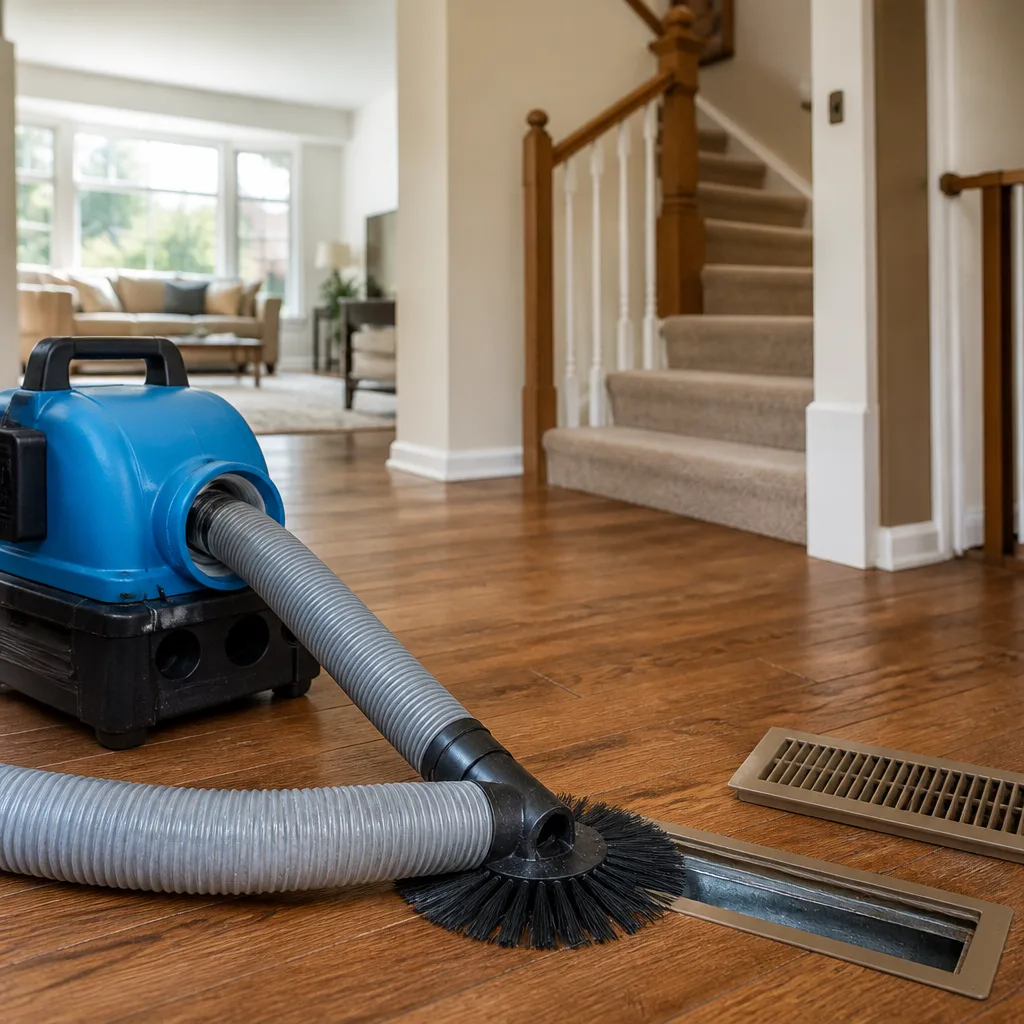 Whole-home duct cleaning
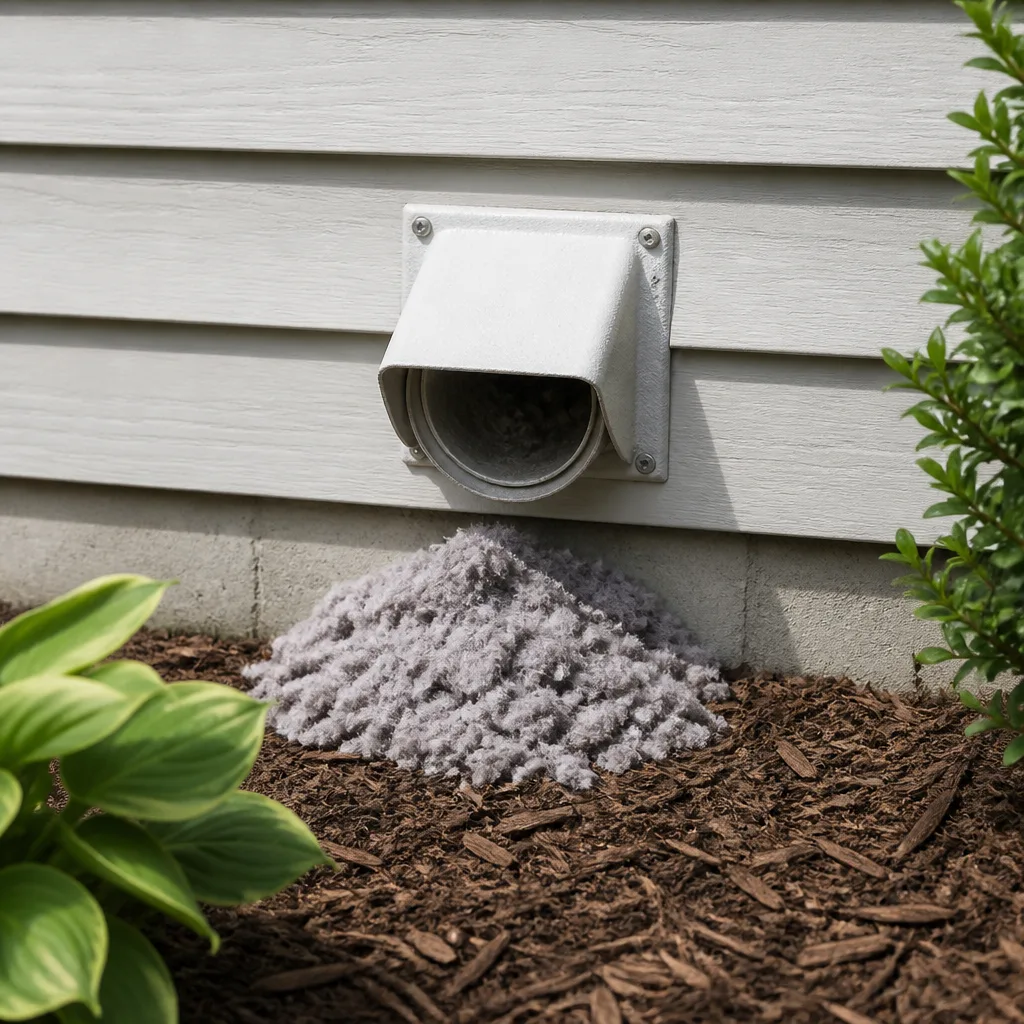 Dryer vent cleaning
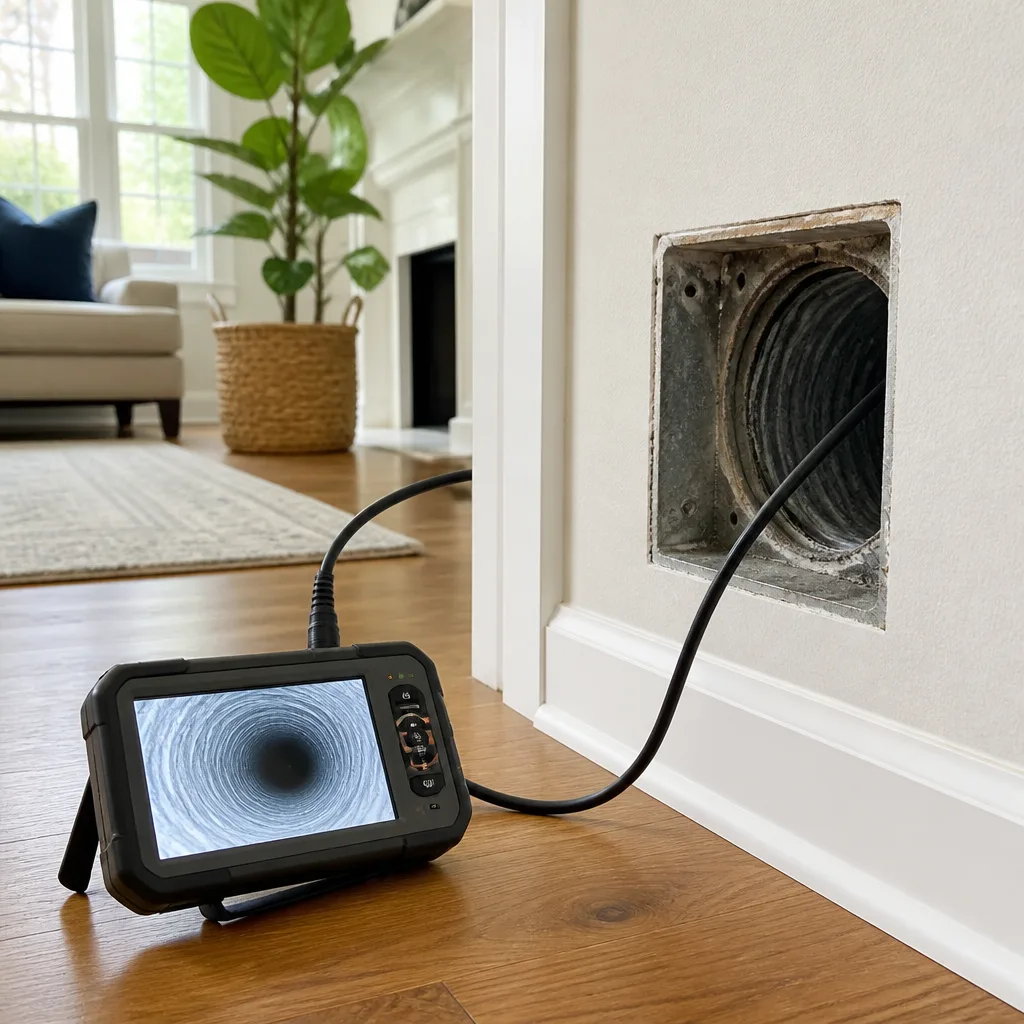 Camera inspection
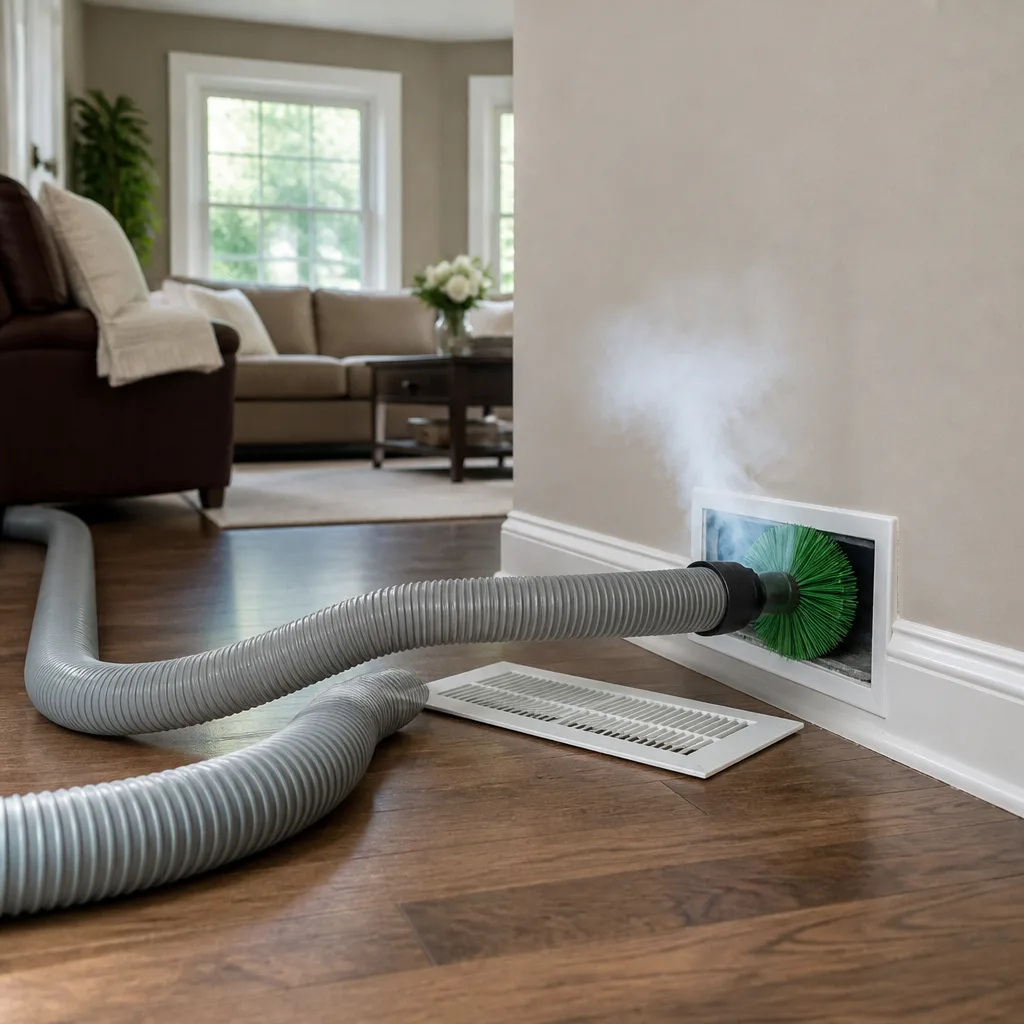 Sanitizing & deodorizing
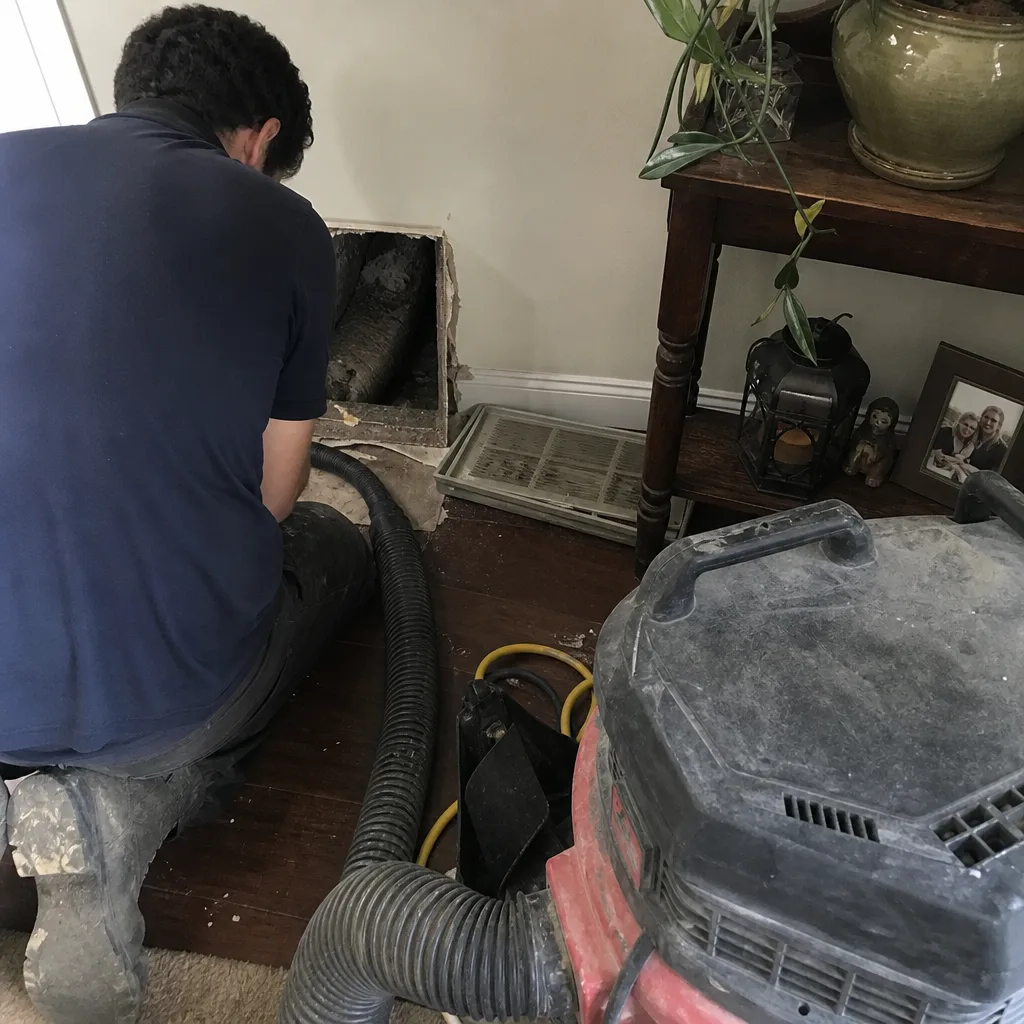
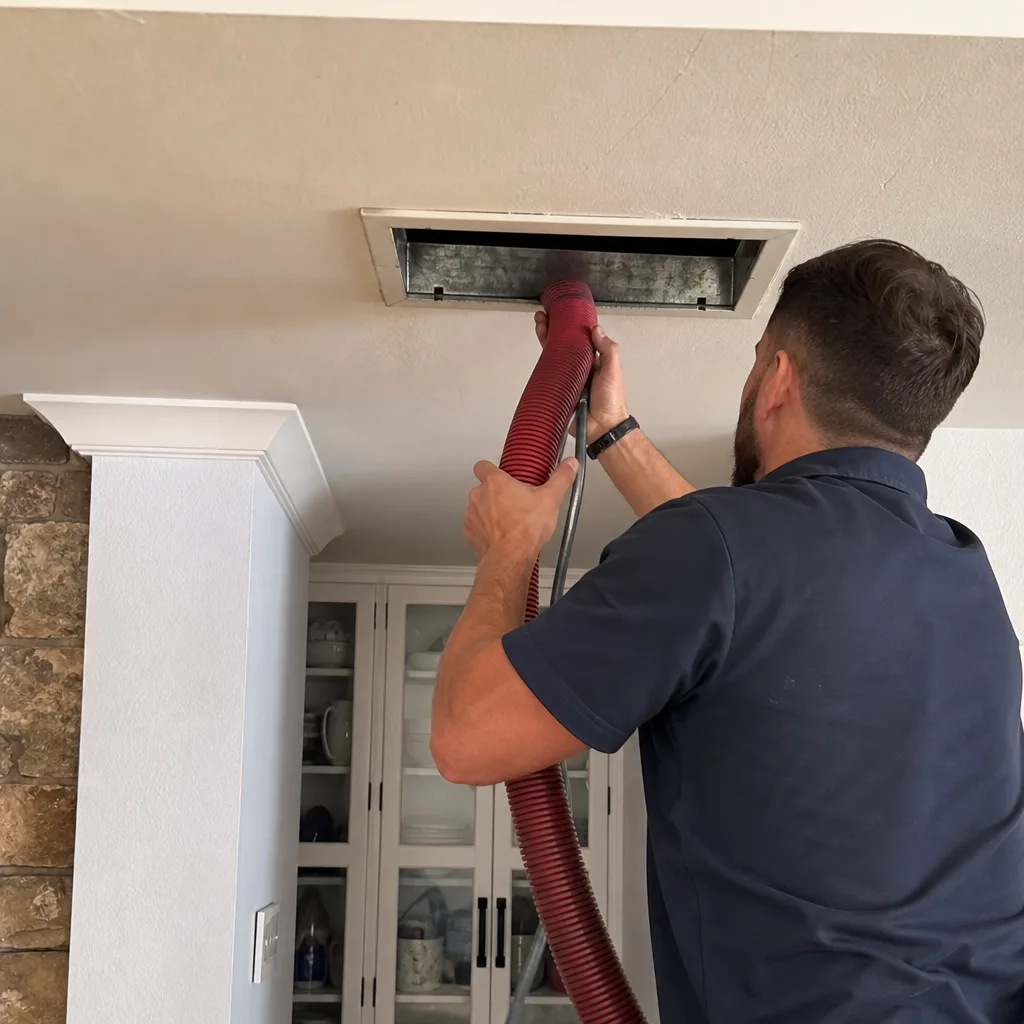
Whole-system duct and dryer vent check with before-and-after photos - you see exactly what came out of your vents
That "$99 whole-house special" is a bait ad - the real number appears once they are in your hallway, or the "clean" is a shop-vac at the register. We photograph the inside of your ducts before and after instead.
Air Duct Cleaning Emergency Preparedness Guide for La Jolla Homes
Most La Jolla homeowners have earthquake kits and wildfire evacuation plans. Almost none have a plan for what happens inside their HVAC system after the disaster. That’s a costly blind spot. After a wildfire smoke event, a nearby demolition, or a water damage remediation project, your ductwork can hold particulates that your system then distributes to every room at once. This guide covers what to do in the first 48 hours, when to seal your system, how to document damage for insurance, and how to know whether you need Air Duct Cleaning, a repair, or a more serious assessment before you touch the thermostat again. La Jolla’s coastal location adds complications most generic preparedness guides never mention.
Styles & brands we work with
- Whole-home duct cleaning
- Dryer vent cleaning
- Camera inspection
- Sanitizing & deodorizing
Quick Answer
After any event involving wildfire smoke, construction dust, or water damage in La Jolla, shut your HVAC off at the thermostat and seal supply and return registers until a professional assesses the ductwork. Running the system without an assessment can distribute smoke residue, mold spores, and possibly asbestos fibers from pre-1980 construction throughout the home. Post-event duct assessment is a distinct, time-sensitive task that affects whether your HVAC becomes the mechanism that makes indoor air uniformly worse instead of better.
Table of Contents
- The Three Post-Event Scenarios That Demand Immediate Duct Assessment
- What Smoke Infiltration Looks Like Inside Ductwork Versus Surface Odor
- How to Seal Your HVAC System During an Active Smoke or Dust Event
- What Documentation to Create Immediately After an Event
- Who to Call in What Order: Duct Cleaner, Industrial Hygienist, or Remediation Contractor
- Why La Jolla’s Coastal Climate Makes Post-Event Duct Assessment Different
- Common Mistakes to Avoid
- When to Call a Professional
- Frequently Asked Questions
- The Bottom Line
The Three Post-Event Scenarios That Demand Immediate Duct Assessment
Not every emergency looks like flames or floodwater. Three situations in La Jolla trigger the need for duct assessment before you run your HVAC again. Each has a different contamination profile and a different timeline.
Scenario one: wildfire smoke infiltration. When smoke from a fire in East County or Camp Pendleton drifts over La Jolla, it’s not just an outdoor nuisance. Your HVAC pulls outdoor air through fresh-air intakes, bathroom exhaust fans, and small leaks in the duct system itself. Smoke particulates settle inside supply and return ductwork, coating the interior with a fine layer of combustion products that include polycyclic aromatic hydrocarbons, formaldehyde precursors, and char particles. The smoke you smell on surfaces in the living room is nothing compared to what’s packed inside the ducts. Every time the system cycles, it re-aerosolizes that residue.
Scenario two: nearby construction or demolition. La Jolla has a mix of brand-new custom homes and structures built before 1980. Demolition or major renovation next door creates dense dust plumes that enter through open windows, but also through the HVAC system’s combustion air vents and any penetrations in the duct run. The specific hazard here is asbestos. Homes built before 1980 commonly contain asbestos in drywall joint compound, popcorn ceilings, pipe insulation, and vinyl flooring. When a neighboring structure is demolished, and the dust settles on your property, your HVAC can pull those fibers into the duct system. Asbestos fibers are microscopic, remain airborne for hours, and do not break down. A standard visual inspection cannot confirm or rule out asbestos. If the demolition dust entered your home, assume the ducts are contaminated until proven otherwise.
Scenario three: post-water-damage mold remediation. La Jolla’s marine layer drives ambient humidity to 70-80% for much of the year. That means any water intrusion event, whether a pipe break, roof leak, or window failure during a winter storm, creates conditions for mold growth inside walls, under flooring, and inside duct insulation lining. If you had a remediation contractor dry out the structure but never addressed the HVAC system, the ducts can be the reservoir that re-contaminates everything. Mold spores inside ductwork survive remediation, and once humidity rises again, the colony reactivates. Duct cleaning after water damage is not optional maintenance in La Jolla. It’s part of the remediation scope, and our Air Duct Cleaning Maintenance Checklist for La Jolla Homeowners can help you track what comes next.
What Smoke Infiltration Looks Like Inside Ductwork Versus Surface Odor
Here’s the distinction most homeowners miss: smoke odor in the living room and smoke residue inside the ductwork are two separate problems requiring two separate responses. Surface odor means smoke particles settled on furnishings, walls, and carpet. You can clean that with professional surface cleaning, repainting, and time. Duct infiltration means the smoke got into the HVAC airstream and is now coating the inside of the supply trunks, branch runs, and return plenum.
Inside ductwork, smoke residue looks like a fine black or gray film, often with a slight greasy texture from the combustion of oils and resins in vegetation. Wildfire smoke is stickier than cigarette smoke, which is why it clings so persistently to galvanized steel and flex duct interiors. That film is not just an odor source. It’s a reservoir of particulate matter that releases back into the airstream whenever air moves over it. This is why you can clean surfaces, run air purifiers, and still smell smoke every time the HVAC kicks on.
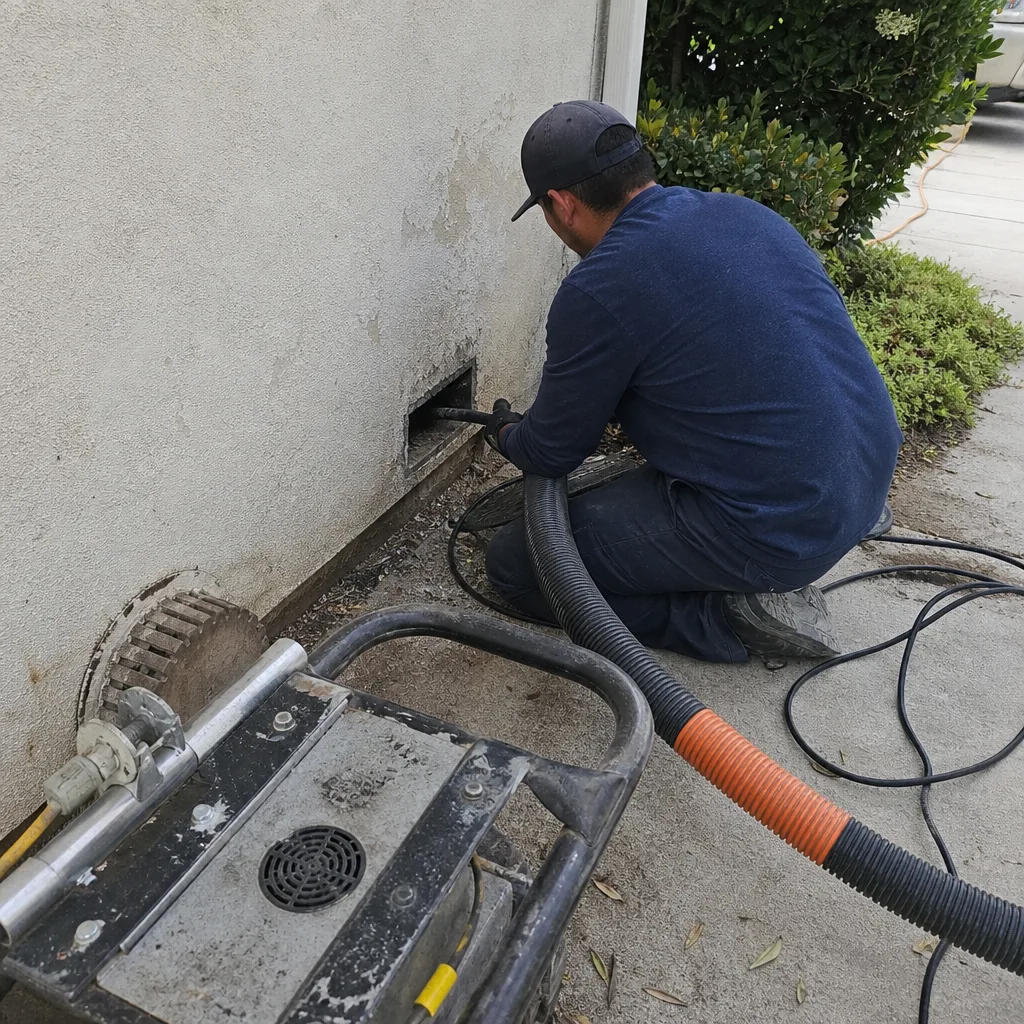
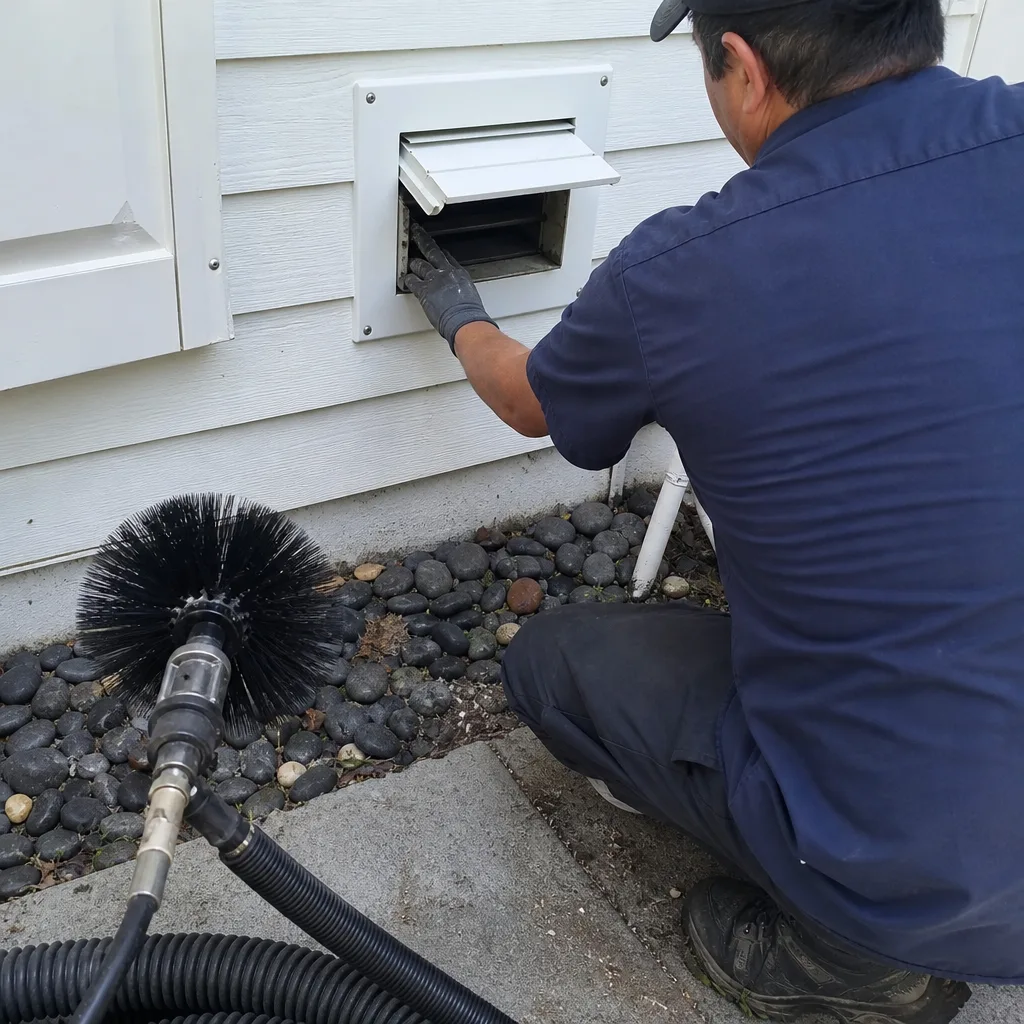
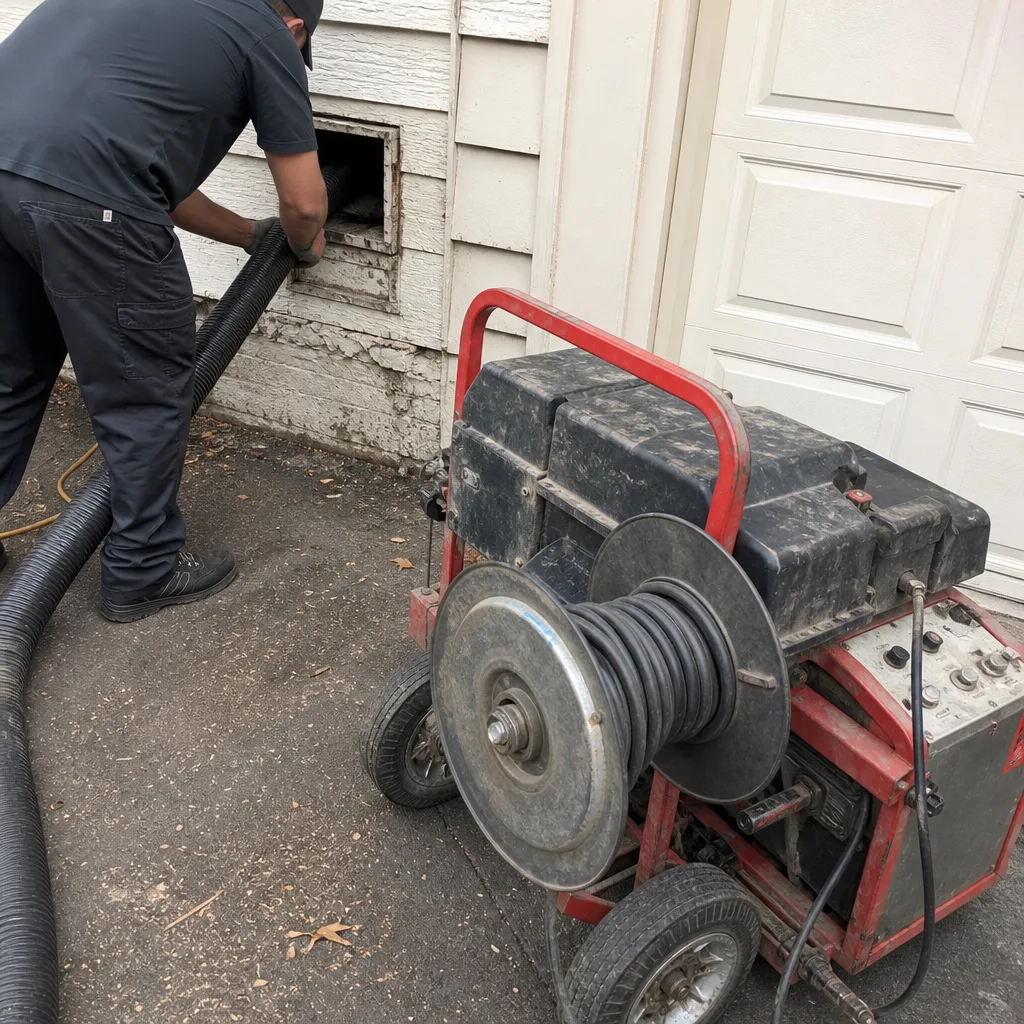
In our experience with post-wildfire assessments around San Diego County, we use a different protocol than standard cleaning for smoke-affected systems. Abatement Technologies air scrubbers with HEPA filtration are placed in the living space during cleaning to capture particles that get dislodged during agitation. Negative-air containment can be established so dust from the duct interior doesn’t blow into bedrooms during the process. On the equipment side, Nikro rotary brush systems agitate the interior walls more thoroughly than a vacuum-only approach, which matters because smoke film bonds to the metal over time. A shop-vac pushed through the register can’t remove it.
How to Seal Your HVAC System During an Active Smoke or Dust Event
If you’re in the middle of a smoke event, either from a wildfire or a nearby demolition project, you need to stop the system from pulling contaminated air into the ductwork. This is an emergency step, not a permanent solution. Do it as soon as you know contamination is present.
- Set the thermostat to OFF, not AUTO. Auto mode lets the fan cycle for circulation even without heating or cooling. That fan will pull smoke through the return grilles and into the duct system. OFF stops all airflow.
- Close all supply registers. Every room’s supply vents should be closed at the register face. This reduces passive air movement through the ducts from stack effect and wind pressure.
- Block the return grille. The main return is the largest opening in the system. Cover it with a piece of cardboard or a taped plastic sheet to prevent smoke from being drawn into the return plenum by pressure differentials. Do not use anything that could get sucked into the duct if the fan accidentally turns on.
- Close fresh-air intake dampers if your home has them. Some La Jolla homes with energy-recovery ventilators or dedicated outside air systems have wall-mounted intake vents. Close those dampers manually.
- Check the filter. Replace the HVAC filter during and after the event. For smoke particles, use a MERV 13 filter if your system can accommodate the increased resistance. MERV 11 is the minimum useful rating for smoke particulate capture. Anything below MERV 8 is essentially decorative during a smoke event. Honeywell produces both MERV 11 and MERV 13 filters that fit standard 1-inch and 4-inch filter cabinets.
- Do not run portable fans or bathroom exhaust. Bathroom exhaust fans create negative pressure in the home, which pulls outdoor air in through gaps and cracks, including around duct penetrations. Turn them off during smoke events.
Once the event passes, the system stays off until a professional inspects and cleans it. Do not assume the filter caught everything. The filter only protects the equipment, not the ductwork downstream.
What Documentation to Create Immediately After an Event
Insurance adjusters and remediation professionals need a record of what happened, when it happened, and what you did about it. Without documentation, a smoke or dust claim gets denied. With documentation, you have a clear timeline that supports your case for professional cleaning or remediation coverage.
Start the log the moment you notice the event. Here’s the sequence to follow:
- Photograph everything before touching anything. Show the smoke plume outside, dust on exterior surfaces, the condition of window screens, and the filter in your HVAC system. Filter photos are critical evidence because grey or black filter media demonstrates airborne particulate entry after the event began.
- Record HVAC shutdown time. Write down the exact time you set the thermostat to OFF. This establishes that you did not continue running the system after discovering contamination. Insurance adjusters look for that detail.
- Note the HVAC system details. Photograph the manufacturer’s label on the air handler and condenser. Include the system age if you know it, filter type and MERV rating, and the date of the last filter change. This creates a baseline for the condition of the system before the event.
- Document air quality observations. If you have a portable PM2.5 monitor, log the readings hourly during the event. If you don’t have one, note the visible haze level indoors and any odor intensity changes. Odor that persists after surfaces are cleaned points to duct contamination.
- Preserve the contaminated filter. Do not throw away the filter from the event period. Seal it in a plastic bag and label it with the date. If asbestos testing is needed, the filter can be analyzed for fiber content.
- Keep a repair and maintenance log going forward. If you schedule duct cleaning after the event, ask for before-and-after documentation of the work. This proves remediation was performed and protects you if a future claim requires evidence that contamination was addressed.
La Jolla homeowners with large custom homes and multi-zone systems need extra diligence here. A single filter photo is not enough when the home has multiple returns and zone dampers. Document each return grille location, because contamination can be zone-specific.
Who to Call in What Order: Duct Cleaner, Industrial Hygienist, or Remediation Contractor
The order of calls matters, and the right order depends on what happened. Getting this wrong means either wasting money on cleaning that doesn’t solve the problem or running your system before it’s safe.
Call a duct cleaning professional first when: the event was wildfire smoke that infiltrated but did not involve structural damage or water intrusion. Smoke from a fire miles away is a particulate contamination event. Source-removal Air Duct Cleaning in La Jolla with HEPA filtration is the appropriate response. The equipment required includes rotary brush agitation plus containment-level filtration, not a standard vacuum service.
Call an industrial hygienist first when: the event involved demolition of a pre-1980 structure within a block of your home, or when significant dust entered the home from a renovation involving old drywall. The hygienist samples dust from horizontal surfaces inside the home, and possibly from the HVAC filter, to test for asbestos fibers. If asbestos is present, the response is different, requiring licensed abatement protocols. Duct cleaning before asbestos testing can spread fibers that were previously settled.
Call a water damage remediation contractor first when: the event involved standing water, saturated drywall, or visible mold growth. The remediation contractor extracts water, dries the structure, and removes mold-affected materials. Ductwork assessment runs parallel to this work. If mold is present, the ducts must be inspected for contamination before you run the system again. After remediation is complete, a duct cleaning with containment protocols removes any remaining spores and debris from the airstream.
In many cases, Air Duct Repair in La Jolla is part of the post-event scope. Smoke and water damage compromise flex duct connections, tear insulation lining, and loosen joints. Cleaning alone cannot fix structural damage to the duct system. A company that handles both cleaning and repair in one visit saves you a second dispatch and the cost of coordinating between contractors.
Why La Jolla’s Coastal Climate Makes Post-Event Duct Assessment Different
La Jolla’s climate creates conditions that standard duct cleaning guides, written for inland cities with dry heat, simply do not address. For more guides & resources tailored to coastal California homes, see our blog. Three coastal factors change the contamination picture and the urgency of response.
Humidity accelerates mold growth. Smoke residue and construction dust are dry particulate problems. But when those particulates embed in the fibrous insulation lining of ductwork, and the marine layer keeps indoor humidity elevated for months at a time, you create conditions where mold can take hold. A smoke-affected duct system in dry, inland Poway might sit stable for weeks. In La Jolla, where morning overcast and 70% relative humidity are normal from May through July, mold colonization can begin within 48 to 72 hours after moisture is introduced. Post-event duct cleaning in La Jolla is not a “we’ll get to it next month” task.
Salt air corrodes damaged duct surfaces. If an event damages galvanized steel ductwork, whether from water intrusion or from HVAC operation during heavy smoke, the salt-laden coastal air accelerates corrosion at the damage site. Ductwork that requires repair should be addressed promptly. The longer corrosion develops, the more extensive the repair. This is a La Jolla-specific issue that tenants and property managers in newer communities like La Jolla Shores and La Jolla Village should factor into their post-event timelines.
Coastal homes run HVAC in shoulder seasons. Inland San Diego homes shut down their systems for weeks at a time in spring and fall. La Jolla homes run systems year-round because the marine layer demands humidity control and occasional heat. A contaminated duct system in La Jolla moves air through those contaminants daily, not intermittently. This increases the urgency of post-event assessment.
For the standard maintenance cleaning that prevents buildup before an event, see our Air Duct Cleaning La Jolla home overview. For the dryer vent service that addresses a documented fire-risk hazard, see Dryer Vent Cleaning in La Jolla. These services maintain the system so that when an emergency does occur, the baseline condition is already cleaner.
Common Mistakes to Avoid
- Running the fan on AUTO after a smoke event. The fan circulates smoke residue through the ducts even when the heating or cooling cycle is off. Set the system to OFF, not AUTO, until a professional assesses the ducts.
- Replacing the filter and assuming that solved it. The filter protects the air handler, not the ductwork downstream. Smoke particles that passed through the filter before you replaced it are now coating the supply runs.
- Calling a low-ball duct cleaner who uses a shop-vac. Post-event contamination requires rotary brush agitation plus HEPA filtration. Consumer-grade vacuums cannot remove smoke film or mold spores from duct interiors. A low price quoted over the phone without an inspection is a red flag.
- Waiting to document until after you’ve cleaned surfaces. The filter condition, the settled dust on surfaces, and the outdoor event conditions are evidence. Wiping everything down before photographing the evidence weakens your insurance claim.
- Assuming nearby demolition posed no risk because your windows were closed. HVAC systems pull outdoor air through combustion vents, fresh-air intakes, and duct leaks whether windows are open or not. Closed windows reduce but do not eliminate infiltration.
- Skipping the post-remediation duct inspection after water damage. Remediation contractors dry the structure. They don’t necessarily inspect or clean the HVAC system. If mold is present in the ducts, the problem returns within weeks. Aprilaire dehumidifiers and Honeywell media filters can help manage humidity and particulate loads, but they cannot remove contamination that is already present in the ductwork.
When to Call a Professional
If any of these apply to your La Jolla home, schedule a professional assessment before running the HVAC again: wildfire smoke entered the home and the odor persists after surface cleaning; demolition or renovation occurred within a block and significant dust infiltrated; water damage affected walls, floors, or ceilings and a remediation project was completed without HVAC assessment; the system was running during the event and the filter shows gray or black discoloration; or any occupant has a diagnosed respiratory condition that could be aggravated by airborne particulate. Air Duct Cleaning La Jolla offers free estimates in La Jolla, call (866) 282-7507 to schedule an inspection.
Frequently Asked Questions
Post-event duct cleaning in La Jolla typically ranges from $450 to $1,200 for a standard single-family home, depending on system size, number of zones, and contamination severity. Smoke remediation with HEPA containment equipment adds cost because of the air scrubber time and additional filtration stages. The exact price requires an on-site inspection to assess duct length, system configuration, and contamination level. Call (866) 282-7507 for a free estimate specific to your home’s post-event condition.
No. Running the system during a smoke event draws contaminated air into the duct system where it deposits on interior surfaces. The filter captures some particulate before it reaches the air handler, but it does not protect the return and supply ductwork upstream of the filter. Once smoke residue is inside the ducts, every future system cycle re-aerosolizes it. Shut the system off and keep it off until the ducts are professionally assessed and cleaned.
You cannot determine this by visual inspection. Asbestos fibers are microscopic. If demolition of a pre-1980 structure occurred nearby and dust entered your home, an industrial hygienist must sample dust from surfaces or the HVAC filter to test for the presence of asbestos fibers. Do not schedule duct cleaning before the test results come back. Cleaning before testing can distribute settled fibers into the airstream where they remain airborne for hours.
For wildfire smoke particulate capture, a MERV 13 filter is the recommended minimum for meaningful protection. MERV 11 filters capture a portion of smoke particles but allow finer combustion products through. Before installing a MERV 13 filter, verify that your air handler can accommodate the increased pressure drop. Some older systems experience reduced airflow with high-efficiency filters. Honeywell manufactures MERV 11 and MERV 13 replacement filters in common residential sizes.
Coverage depends on your policy and the event. Wildfire smoke damage claims are often covered under smoke damage provisions, but insurers may require documentation that the smoke entered the home and affected the system. Water damage claims typically cover duct cleaning when the ductwork was directly affected by the water intrusion event. Demolition dust and asbestos concerns are more complex and may require separate coverage analysis. The documentation log described in this guide is your strongest tool for supporting a claim.
Do not run the system until a professional has inspected and, if necessary, cleaned the ductwork. There is no safe waiting period. Smoke residue does not dissipate on its own inside ducts. It remains in place until mechanically removed with source-removal cleaning methods. The system should remain off from the moment you first detect smoke infiltration until cleaning is complete. Call (866) 282-7507 to schedule a post-event duct assessment in La Jolla.
The Bottom Line
La Jolla homes face a specific set of post-event duct contamination risks: wildfire smoke with its sticky, persistent residue; demolition dust with the potential for asbestos from pre-1980 structures; and water damage that interacts with coastal humidity to create mold conditions within days. The response to each is different, but the first step is always the same: shut the system off and leave it off until the ducts are inspected. Documentation created immediately after the event protects your insurance claim. Professional source-removal cleaning with HEPA containment equipment removes contamination instead of redistributing it. Preparing for the next event starts with understanding what happened during the last one.
Written by the team at Air Duct Cleaning La Jolla, serving La Jolla since 2018.
See the difference
 Before
 After
 Before
 After
 Before
 After