
Last updated November 2, 2026
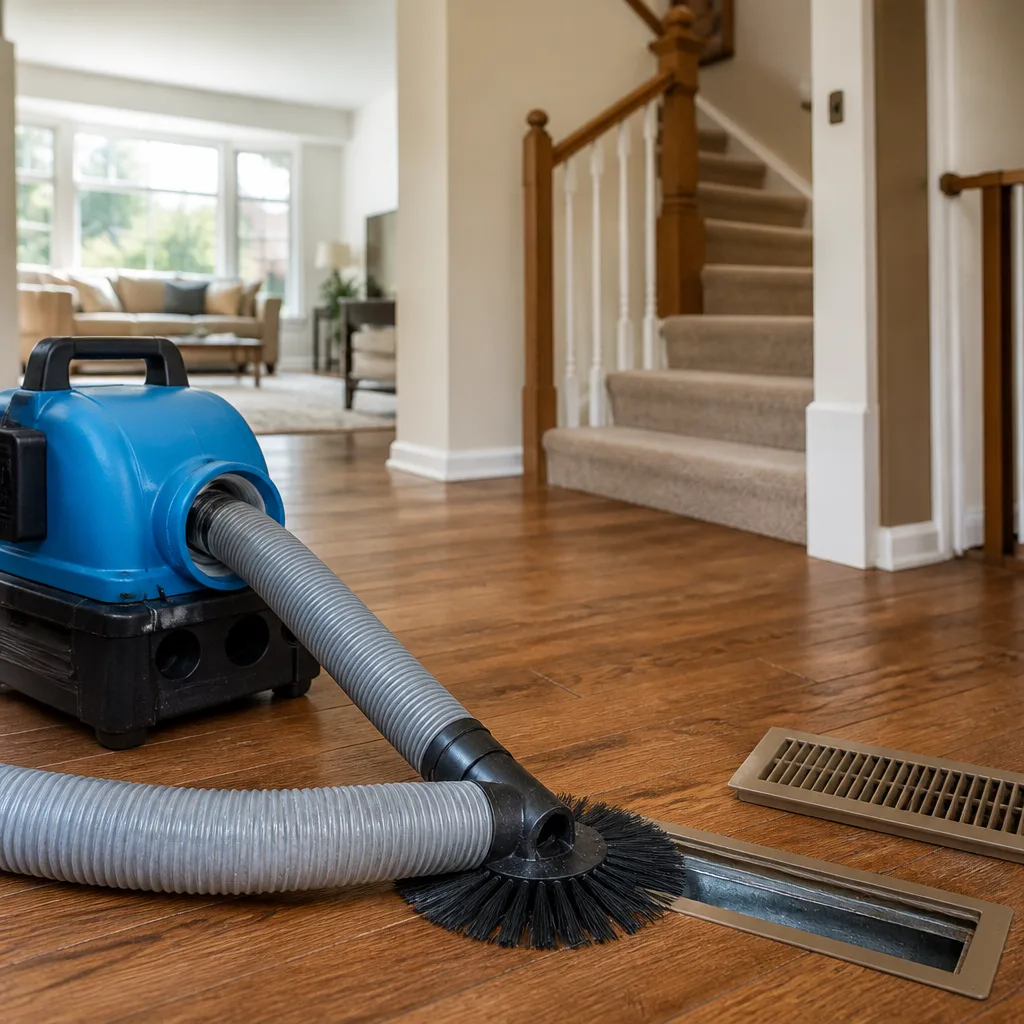 Whole-home duct cleaning
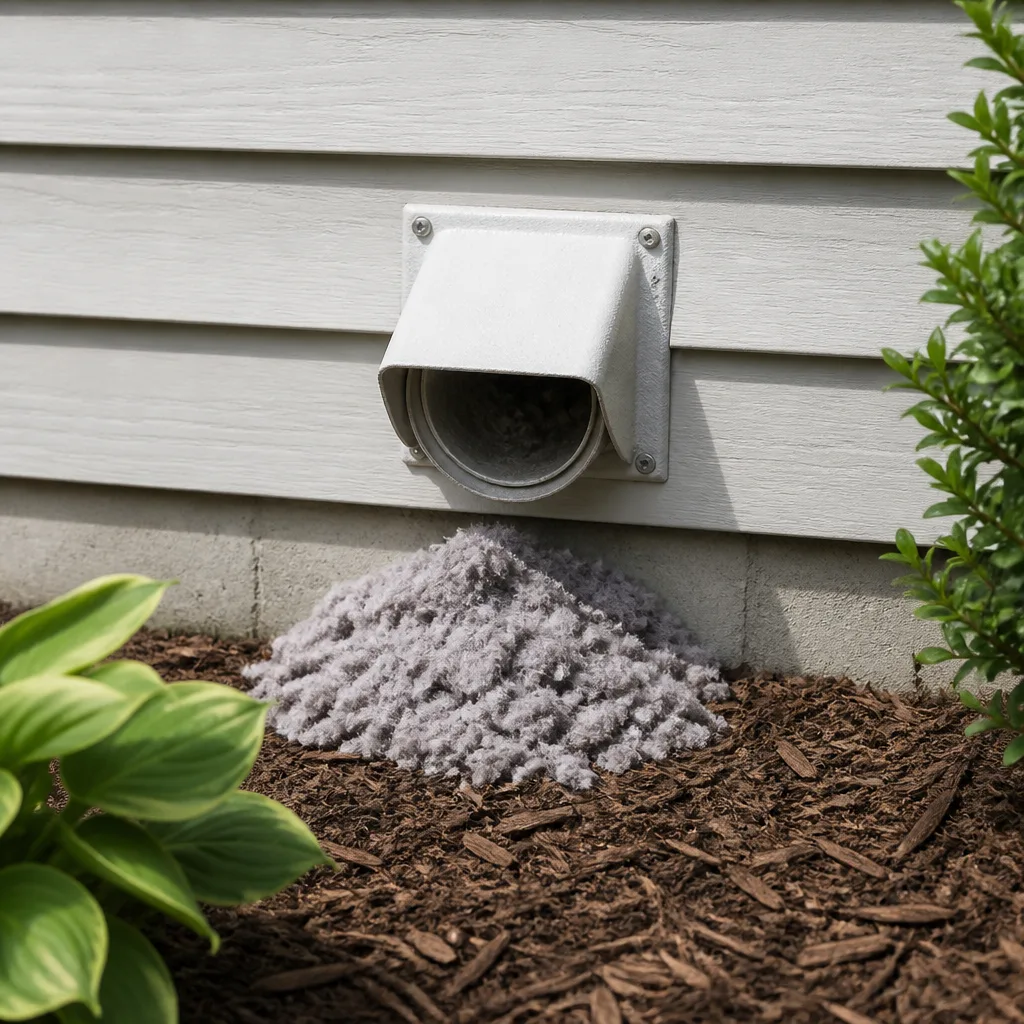 Dryer vent cleaning
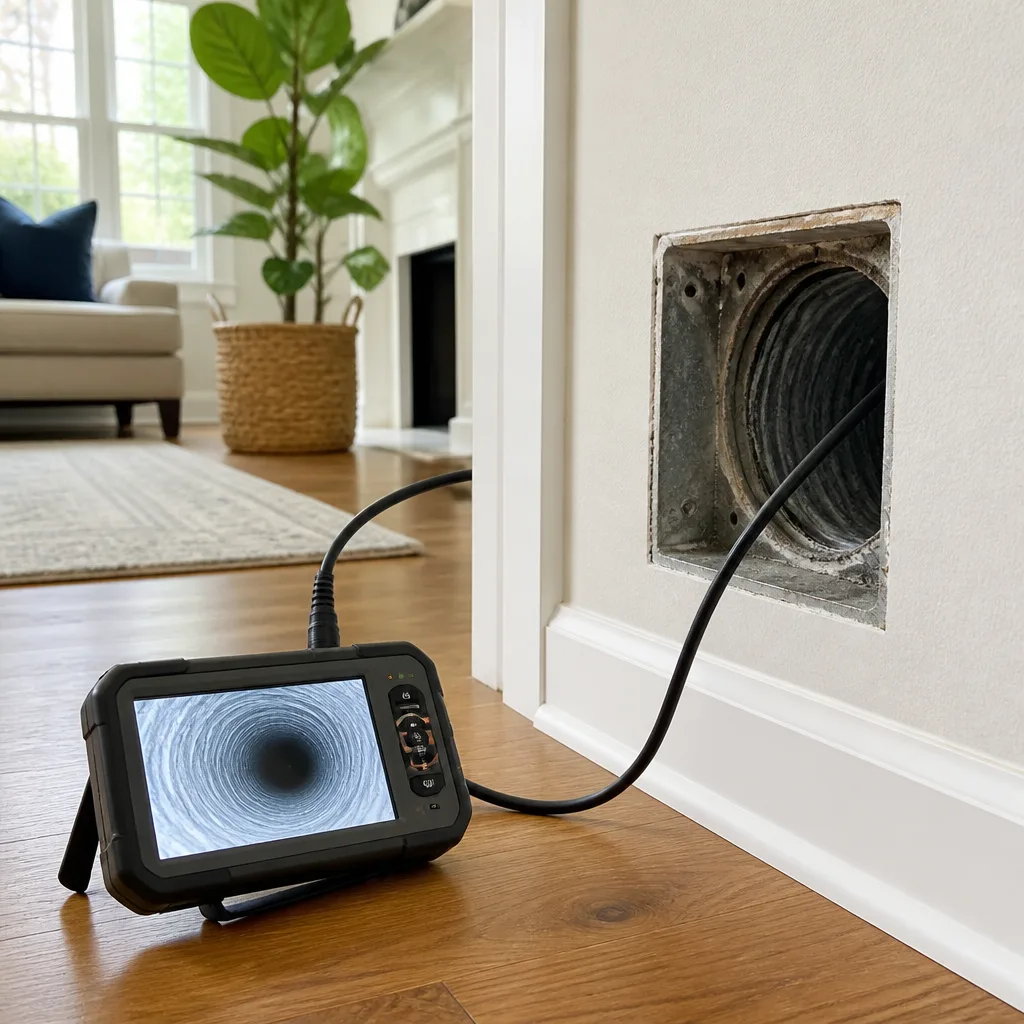 Camera inspection
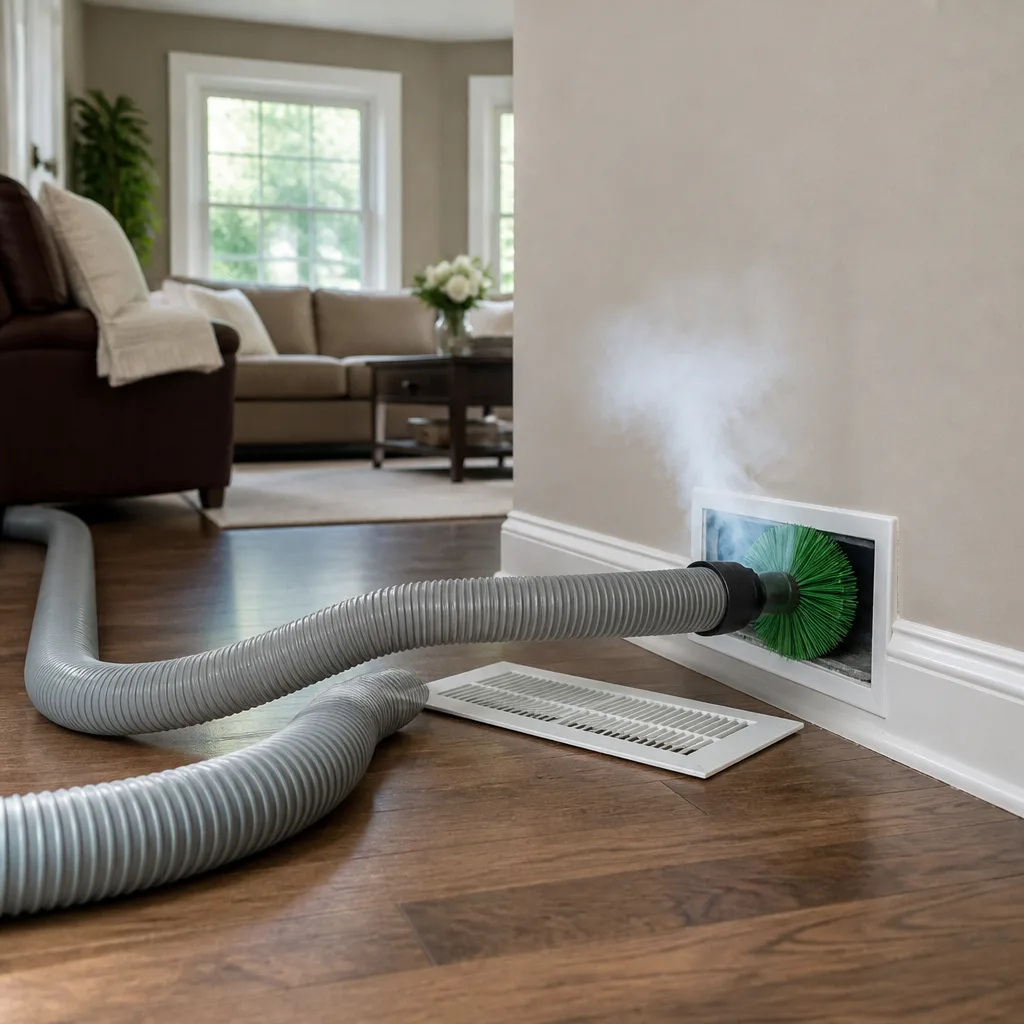 Sanitizing & deodorizing
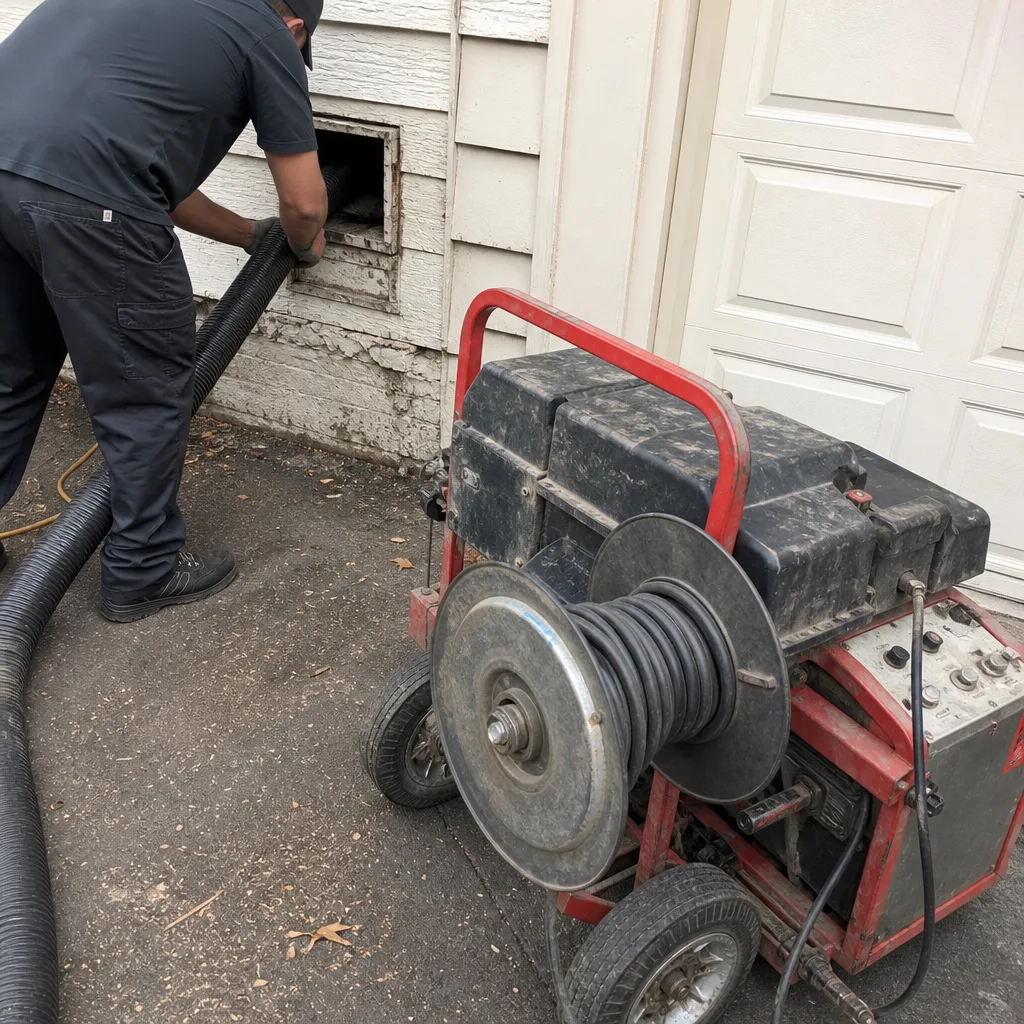
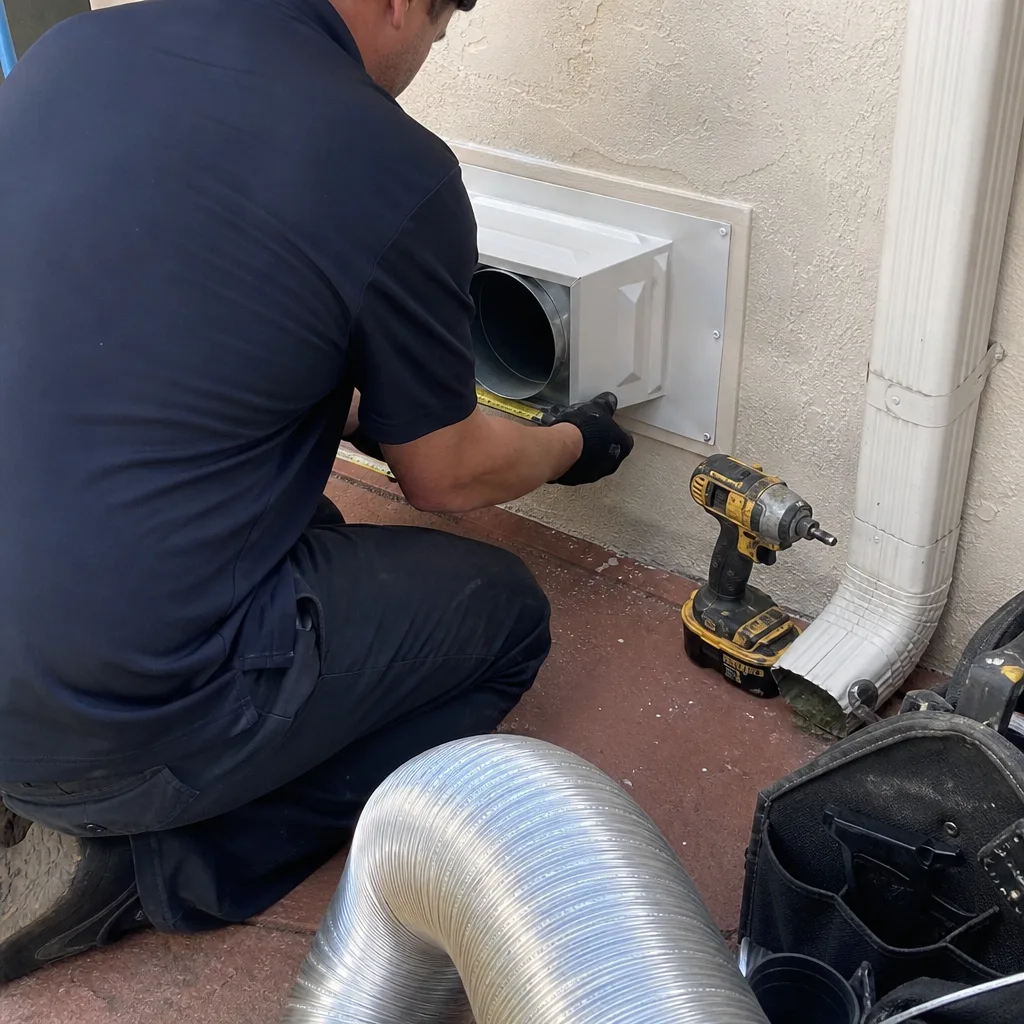
Whole-system duct and dryer vent check with before-and-after photos - you see exactly what came out of your vents
That "$99 whole-house special" is a bait ad - the real number appears once they are in your hallway, or the "clean" is a shop-vac at the register. We photograph the inside of your ducts before and after instead.
Air Duct Cleaning Permits, Codes & Inspections in CA: What You Need to Know
Here’s something that surprises most La Jolla homeowners: the California Building Code has thousands of pages governing construction, electrical, plumbing, and mechanical work, but you won’t find a single section requiring a permit for cleaning air ducts. Suction, brushing, compressed air, sanitizing fog – none of it triggers a permit. What trips people up is what happens when the technician finds something wrong. The moment a duct comes apart at a joint, a register won’t reconnect, or someone decides flex duct needs replacing, you’ve crossed from maintenance into mechanical work – and that’s regulated. This guide explains exactly where that line sits, what California code actually says, how San Diego County interprets it, what La Jolla HOAs add on top, and how to protect yourself at resale. For Air Duct Cleaning Warning Signs: A La Jolla Homeowner’s Reference Guide, see our companion resource.
Quick Answer
Standard air duct cleaning requires no permit in California or within the City of San Diego, because cleaning is classified as maintenance, not construction. However, anything that alters, replaces, or repairs ductwork – reconnecting a fallen section, patching a hole, replacing damaged flex duct, or applying an encapsulant – crosses into mechanical work that falls under California Mechanical Code and may require a permit. The distinction matters because unpermitted mechanical work creates liability you’ll likely discover when you sell the house.
Styles & brands we work with
- Whole-home duct cleaning
- Dryer vent cleaning
- Camera inspection
- Sanitizing & deodorizing
Table of Contents
- Cleaning vs. Mechanical Work: Where California Draws the Line
- What California Building Code Section 604 Actually Says
- San Diego County Amendments and Local Enforcement
- Encapsulants, Antimicrobials, and the Regulatory Landscape
- La Jolla HOA Requirements: Prospect, Coast Walk, and Managed Communities
- Resale Disclosure: What You Must Report About Duct Work
- When a Duct Cleaner Must Stop and Refer to an HVAC Contractor
- Common Mistakes to Avoid
- When to Call a Professional
- Frequently Asked Questions
Cleaning vs. Mechanical Work: Where California Draws the Line
The legal distinction is simpler than most contractors make it sound. Cleaning is removing accumulated material from the interior surfaces of the duct system. Mechanical work is altering, repairing, replacing, or modifying the duct system itself. In your home, these are different activities with different rules.
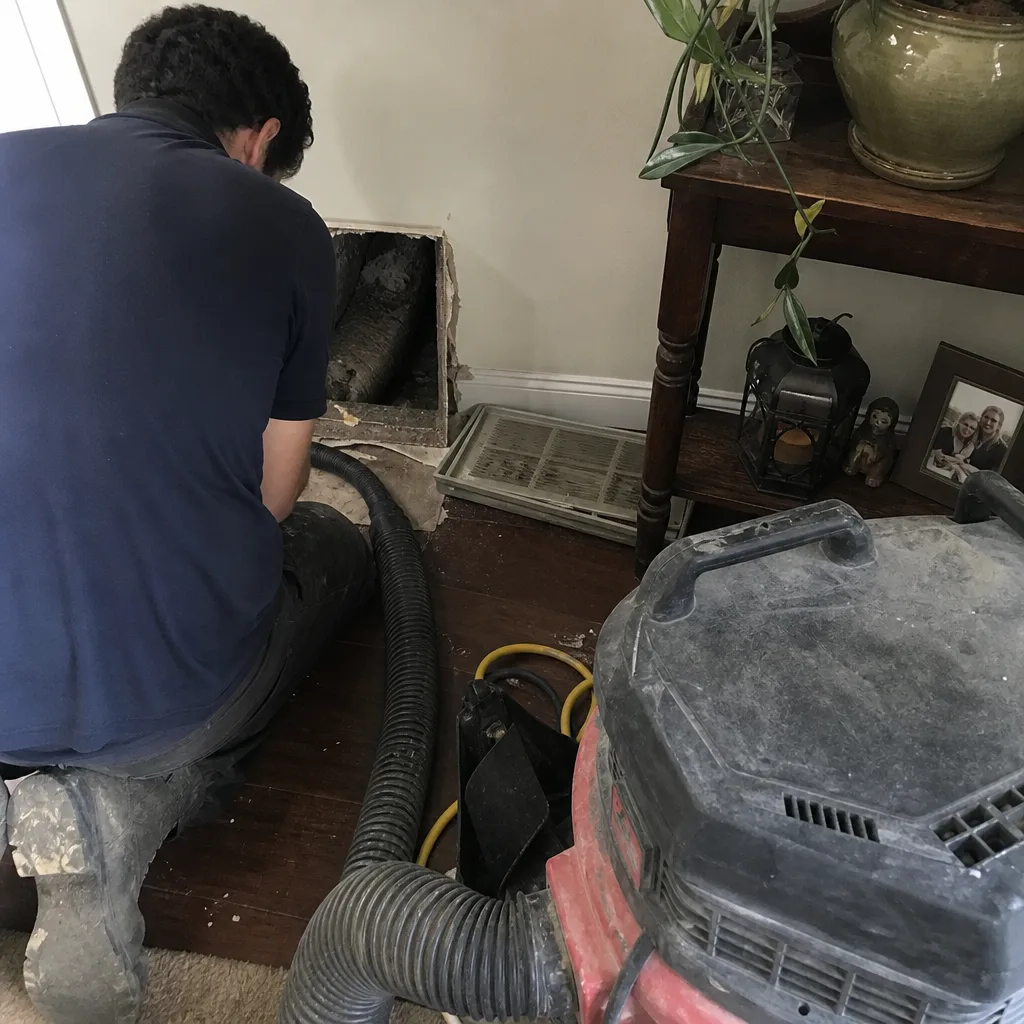
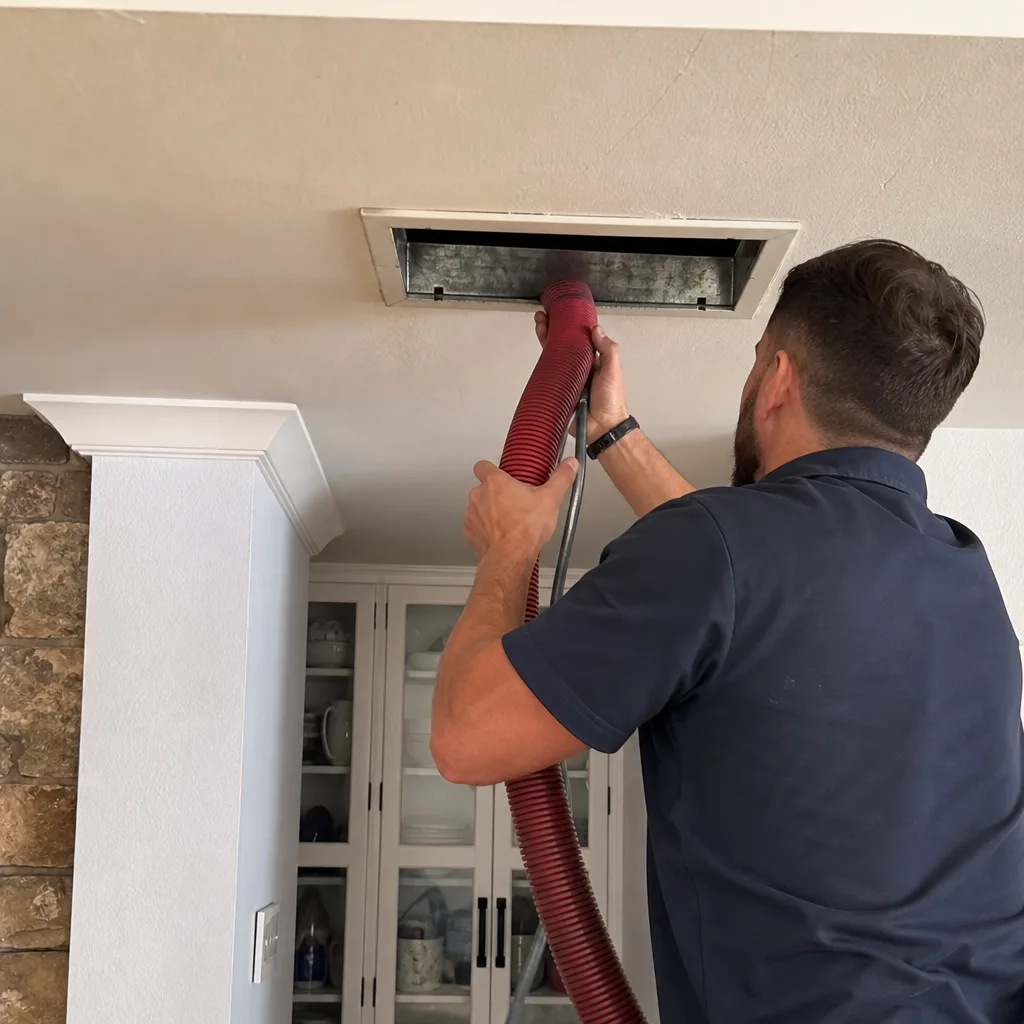
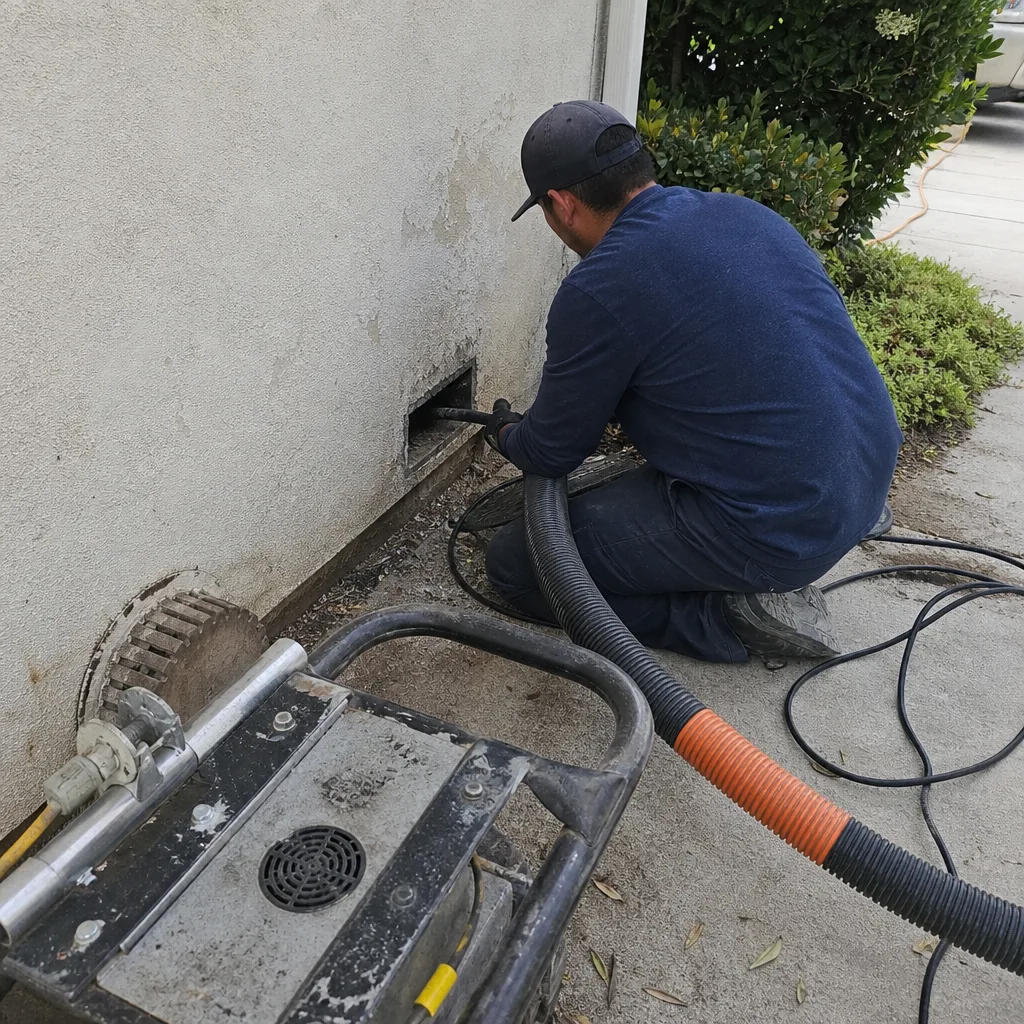
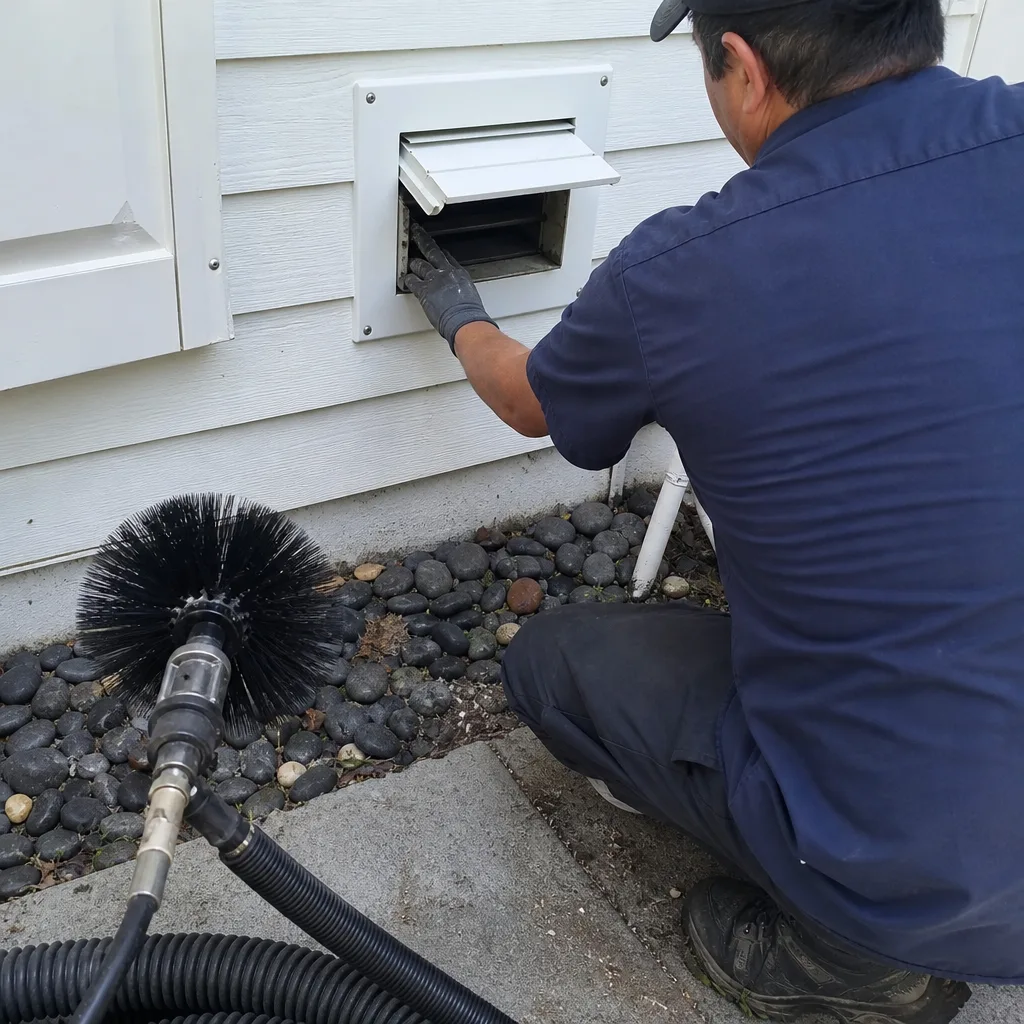
When a technician inserts a Rotobrush rotary brush system into a duct and spins it to dislodge dust, nothing about the duct changes. Same with negative-air equipment from Abatement Technologies – it pulls dislodged particles into a HEPA-filtered containment unit rather than into your living room, but the duct itself remains exactly as it was before. That’s maintenance.
Now consider what happens when the brush hits a section of flex duct that has sagged, or a joint that has separated from years of pressure cycling. Reattaching that joint with sheet metal screws and foil tape is a repair. Replacing a crushed section is an alteration. Both fall under the California Mechanical Code, Chapter 6, which governs duct systems as part of the building’s mechanical infrastructure.
In our experience, this line surprises homeowners in neighborhoods like La Jolla Shores and Bird Rock, where coastal humidity accelerates duct corrosion. The connection points degrade faster near the coast, so we see more disconnected joints and rusted sections during cleanings there than we do in, say, La Jolla Village or Muirlands. The cleaning itself needs no permit. The correction of what the cleaning uncovers often does.
What California Building Code Section 604 Actually Says
Before we go further, a note: we are describing California Building Code and California Mechanical Code as they apply to duct cleaning and related repair work. We are not attorneys, and if you’re dealing with an enforcement action or a property dispute, consult one. What follows is our working interpretation as contractors who operate in this regulatory landscape every day.
California Building Code Section 604 covers mechanical systems generally, including ducts, plenums, and related components. It requires that mechanical work – installation, alteration, repair, replacement – be performed in accordance with the California Mechanical Code and, where applicable, by a licensed contractor holding the appropriate classification. A C-20 license covers warm-air heating, ventilating, and air conditioning. Cleaning is not in this scope. Repair is.
What does that mean in plain terms? If the duct is dirty, a cleaning company with no HVAC contractor’s license can legally clean it. If the duct has a hole, the same company cannot legally patch it – unless it holds a C-20 HVAC license. This is not a technicality. It’s the same principle that lets you paint your walls without a contractor’s license but requires a license to move the wall.
The permit trigger follows the same logic. The California Mechanical Code requires permits for mechanical work that involves installation, alteration, or replacement of equipment or systems. Cleaning doesn’t appear in the permit trigger list because it changes nothing. Repair and replacement do appear, because they change the system’s condition and performance. Some repairs are minor enough that the local building department waives the permit requirement – a loose register re-screwed into place, for example, generally passes without a permit. But the contractor should know which is which, and when in doubt, the building department in San Diego County will tell you on the phone.
San Diego County Amendments and Local Enforcement
San Diego County enforces the California codes with its own amendments, and while duct cleaning remains unregulated, the county is specific about what happens around it. The County of San Diego Department of Environmental Health and the City of San Diego’s Development Services Department both have jurisdiction over mechanical work depending on whether the property falls within the incorporated city or the unincorporated county. La Jolla is part of the City of San Diego, so city code applies.
The practical upshot for La Jolla homeowners: mechanical permits are obtained through the City of San Diego’s Development Services Department, and they typically require a licensed contractor to pull the permit. A duct cleaning company that finds a disconnected joint, a crushed return, or mold-damaged flex duct should tell you, document it, and refer you to a licensed HVAC contractor – or perform the repair themselves if they hold the appropriate license. At Air Duct Repair in La Jolla, for example, the same company that handles cleaning can often address repair needs without a separate contractor visit.
Coastal La Jolla homes present a specific enforcement reality. Homes in La Jolla’s coastal zone – roughly west of La Jolla Boulevard and down into the Village – are subject to additional review for anything that changes the building envelope. A duct repair that involves going through an exterior wall or altering a louver or vent opening may trigger Coastal Development Permit review, not just mechanical review. This is the reason some seemingly minor repairs become multi-week processes. It’s also why you want a contractor who has worked in the specific neighborhood before.
Source-removal cleaning of the type we do at Air Duct Cleaning La Jolla home – rotary brush systems, Nikro HVAC equipment, and full containment – touches nothing structural, so it remains outside all of this. The regulatory interest begins only when something is found that requires modification of the duct system.
Encapsulants, Antimicrobials, and the Regulatory Landscape
Some duct cleaning companies offer to apply an “antimicrobial fog” or “encapsulant coating” after cleaning. The pitch sounds responsible – kill the mold, seal the surface. The regulatory reality is more complicated, and the disclosure requirements are not optional.
Any product marketed as an antimicrobial – something that kills mold, bacteria, or fungi – is, by federal law, a pesticide. That means the Environmental Protection Agency regulates it under FIFRA, the Federal Insecticide, Fungicide, and Rodenticide Act. A product that is marketed as a sanitizer, disinfectant, or mold killer on interior surfaces is a pesticide, and the person applying it must follow the product’s EPA label directions exactly. Using a product in a manner inconsistent with its label – for instance, applying an HVAC coil treatment to duct interiors – is a violation.
In California, the requirements are stricter than federal minimums. The California Department of Pesticide Regulation adds its own layer, and in some cases, a person applying antimicrobials in a commercial setting – which can include duct work in rental properties – may need specific licensing. The contractor should be able to name the product, show you the EPA registration number, and explain what the label authorizes. If they can’t answer those three items, decline the service.
Encapsulants are a different category. These are coatings meant to seal surfaces rather than kill organisms. If a contractor proposes to apply an encapsulant inside your ducts, ask what the product is and what its manufacturer states about duct interior application. The National Air Duct Cleaners Association (NADCA) has long cautioned against unnecessary chemical applications in ducts, and the EPA’s guidance for duct cleaning says the same: clean first, apply chemicals only when a specific problem has been identified and documented, and follow the label. We take the same approach. Our crews use mechanical removal – rotary brushing and HEPA-filtered containment – rather than fogging as a default. If we believe an antimicrobial is warranted, we tell you exactly what product we’re proposing, what it’s registered for, and why that specific product in that specific location. That disclosure is part of the job, not an upsell.
La Jolla HOA Requirements: Prospect, Coast Walk, and Managed Communities
La Jolla has a large inventory of planned unit developments, condominiums, and gated communities where the HOA imposes its own rules – and many of those rules have nothing to do with the building code. Along Prospect Street, Coast Walk, and the streets sloping down to La Jolla Cove, many associations have adopted mechanical work disclosure requirements that go beyond the city’s.
In the common areas of a condominium building – which often include the main supply and return trunks serving individual units – the HOA may need to approve access before any cleaning or inspection occurs. Even if the work is inside your unit, the HOA’s rules may require you to notify the management company that a vendor will be on the property, carrying equipment, and accessing mechanical rooms. In a townhome development where duct runs pass through shared walls, the HOA may have an ownership map specifying which sections of duct belong to the unit owner and which belong to the association. That map determines who is responsible for repair if the cleaning reveals damage.
The climate here adds a layer. Homes in coastal La Jolla sit in salt air, and marine-layer moisture moves in most evenings between May and July. Duct systems that run through unconditioned attics or crawlspaces in this environment accumulate rust and separation faster than identical systems two miles inland. An HOA that has seen moisture-related duct failures in previous units will often have procedures in place – and may require that duct work be performed by a vendor from an approved list or with specific insurance levels. It’s worth reading your CC&Rs before you schedule, and if a technician suggests a repair, knowing what your HOA’s rules require will save you a violation notice.
If you’re in a managed community and want to get ahead of the requirements, the sequence is straightforward: check the CC&R section on mechanical systems, notify the management company in writing, confirm whether the building has a duct ownership map, and ask if the association requires proof of insurance from the vendor. We routinely provide certificates of insurance for HOA-managed properties in La Jolla, and it’s a request we are prepared for from the first call.
Resale Disclosure: What You Must Report About Duct Work
California has the most detailed real estate disclosure regime in the country. The Transfer Disclosure Statement, the Supplemental Statutory Disclosure, and the Seller Property Questionnaire all ask about the mechanical systems, and some ask directly about repairs, replacements, and known defects. What does this mean for your ducts?
If you have had ducts cleaned and nothing was found, there is generally nothing to disclose. Cleaning is not a “repair, replacement, or alteration” in the ordinary meaning of those disclosure forms. However, if the cleaning uncovered a problem, and you had that problem fixed – a reattached joint, a replaced section of flex duct – that is a repair, and repairs to the HVAC system are considered material information that a seller must disclose. You don’t need to list every screw turned; the disclosure forms ask about “significant defects or malfunctions” and major repairs. But a known repaired separation in a return duct, or an encapsulation treatment applied inside the ducts, is exactly the kind of item the buyer’s inspector will find and ask about. Disclose it.
Mold remediation is in its own category. If any duct work was remediated due to microbial growth, the disclosure obligation is more serious, and you should obtain and retain the documentation from the remediation: what was found, what was done, what products were applied, and when. Some buyers will request the full remediation file. Having it organized beats reconstructing it under time pressure. For Air Duct Cleaning in La Jolla customers, we recommend keeping the before/after photos from the cleaning and any repair documentation in the same folder you keep for your furnace service records. It’s the kind of file that answers a buyer’s questions before they become objections.
When a Duct Cleaner Must Stop and Refer to an HVAC Contractor
A responsible duct cleaning company has a specific professional obligation: it knows the boundary of its own legal authority and stops when it reaches that boundary. Here’s what that looks like in practice, in order.
- The technician documents the problem. We photograph the separated joint, the crushed section, the rusted connection. The photo goes in the job file with a notation of the location.
- The cleaning plan adjusts. If the problem is in a location where continued cleaning might worsen it – for example, a separated joint where brushing could push debris into the wall cavity – the tech stops cleaning in that area and flags it.
- The homeowner is told directly. You get a plain-language explanation of what was found, why it matters, and what the repair involves. No scare tactics, no pressure. Just information.
- The company recommends the path forward. If the company holds the appropriate HVAC license, it can quote the repair. If it doesn’t, it should refer you to a licensed contractor, ideally one or two names, in writing.
- The documentation is provided. Photos, a written description of the condition, and the recommendation. This document is useful whether you proceed with the same company, call a second contractor for a bid, or file an insurance claim.
The companies that skip this sequence are the ones that create problems. A tech who “just tapes it up” to finish the job quickly has now performed unpermitted, possibly unlicensed mechanical work on your home. That’s not a favor. It’s a liability you inherit. A tech who sees a problem and says nothing is worse – the condition continues to degrade, and the next time it’s discovered, the repair cost may include damage to surrounding materials that could have been avoided.
Common Mistakes to Avoid
- Assuming any contractor with a van can handle duct repair. Cleaning and repair are separate legal categories. If the company doesn’t hold a C-20 HVAC license, it cannot legally repair your ducts. Ask directly: “Are you licensed to perform this repair, and will you pull the permit if one is required?”
- Accepting an unpermitted repair “to save time.” In coastal La Jolla, where many homes sit in Coastal Commission jurisdiction, the cost of retroactively permitting a repair can exceed the original repair cost. Insist on the correct process.
- Letting a technician apply an antimicrobial fog without explanation. Ask to see the EPA registration number and the product label. If there’s no label or the explanation is vague, decline the fog. Mechanical cleaning is effective without chemical add-ons.
- Skipping the HOA check before scheduling. In condominium communities along Prospect and Coast Walk, HOA rules can require written notice before a vendor accesses the property, and some buildings require insurance certificates in the management office before work begins.
- Not keeping documentation. Cleaning reports, before/after photos, repair invoices, and product data sheets all matter at resale and if an insurance claim arises. File them.
- Treating dryer vents as a minor footnote. Your dryer vent is not part of the HVAC system, and cleaning it requires no permit either – but it is a fire-safety issue, and Dryer Vent Cleaning in La Jolla is not a courtesy add-on. Lint accumulation is the leading cause of dryer-related fires. Have the vent cleaned on its own schedule, not just when the HVAC is done.
- Waiting until the inspection report to address duct problems. If you’re selling a La Jolla home, the buyer’s inspector will run the furnace and inspect visible duct sections. Problems found at that stage are resolved under time pressure. Address them before listing.
When to Call a Professional
If your ducts have not been cleaned in several years and you can’t remember the last service date, that’s the simplest reason to schedule Air Duct Cleaning services. If you’ve noticed dust accumulating unusually fast after cleaning the house, air pressure that differs room to room, or a musty odor that appears only when the system runs, those are signs worth investigating. If you’re preparing a La Jolla home for sale, a professional Cleaning with photographic documentation is a strong seller asset. And if a previous repair was done without permits and you’re not sure of its quality, an inspection by a licensed contractor is the right move. Air Duct Cleaning La Jolla offers free estimates in La Jolla – call (866) 282-7507 to schedule one.
Frequently Asked Questions
No. Air duct cleaning is classified as maintenance, not construction, and requires no permit in California or in the City of San Diego. Permits become relevant only when cleaning reveals a problem that requires repair or replacement of duct sections, at which point the mechanical permit rules apply.
Cleaning removes accumulated dust and debris from inside the existing duct system without changing the duct itself. Repair alters the duct system – reconnecting separated joints, patching holes, replacing damaged sections – and falls under the California Mechanical Code, which may require a C-20 HVAC license and a mechanical permit depending on the scope.
Products marketed to kill mold, bacteria, or fungi are pesticides regulated by the EPA, and California adds its own stricter requirements through the Department of Pesticide Regulation. A contractor applying such products should be able to provide the EPA registration number and product label, and the application must follow the label directions exactly. Mechanical source-removal cleaning achieves the same hygiene goal without chemical application in most cases.
Yes, in many managed communities. La Jolla condominium and planned-development HOAs along Prospect, Coast Walk, and similar areas often require written notification before vendors access the property, proof of insurance from the vendor, and compliance with the association’s duct ownership map, which determines whether a duct section belongs to the unit owner or the HOA. Read your CC&Rs before scheduling work.
Disclose any significant mechanical repairs or replacements, including duct repairs, even if they were done years ago. California’s TDS and seller questionnaires ask about known defects and major repairs to mechanical systems, and a buyer’s inspector may find evidence of past repairs. Mold remediation is a separate, more serious disclosure obligation – keep the full remediation documentation.
Professional source-removal cleaning uses rotary brush systems such as Rotobrush, paired with HEPA-filtered negative-air containment units from manufacturers like Abatement Technologies and Nikro. This equipment dislodges debris from duct surfaces and captures it before it can enter the living space. A shop-vac connected to a hose is not source-removal cleaning and will not achieve equivalent results.
The Bottom Line
Air duct cleaning in California requires no permit, no special license, and no inspection – because cleaning changes nothing about the duct system. What changes the picture is what the cleaning finds. A disconnected joint, a crushed flex section, rust through a return drop: those are mechanical defects, and once they’re repaired, the rules switch on. California Mechanical Code governs the repair, the City of San Diego issues the permits, and La Jolla HOAs may impose their own access and insurance requirements. Know the line, keep the documentation, and choose a contractor that understands which side of the line it’s standing on. Explore more guides & resources on our blog. If you’re in La Jolla and want an honest assessment of what’s inside your ducts, call (866) 282-7507 for a free estimate.
Written by the team at Air Duct Cleaning La Jolla, serving La Jolla since 2018.
See the difference
 Before
 After
 Before
 After
 Before
 After