
Last updated November 2, 2026
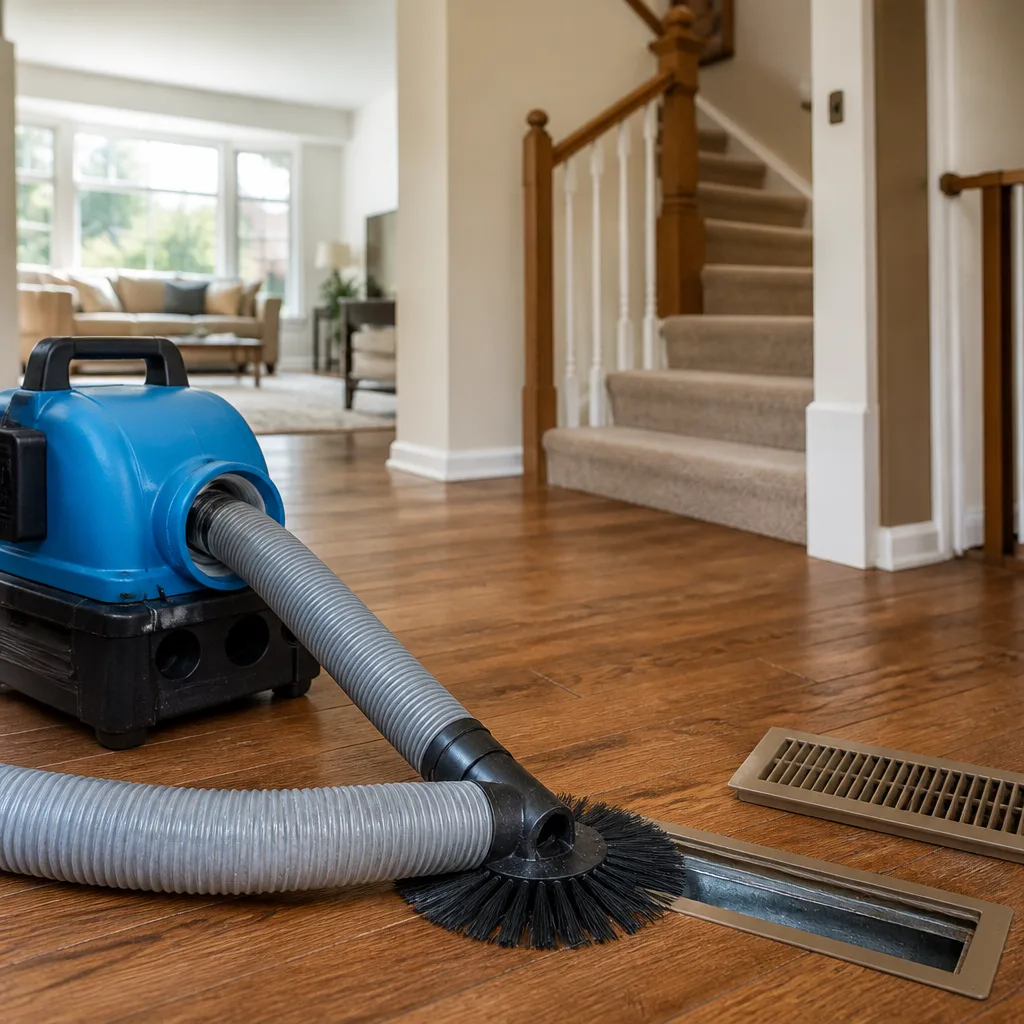 Whole-home duct cleaning
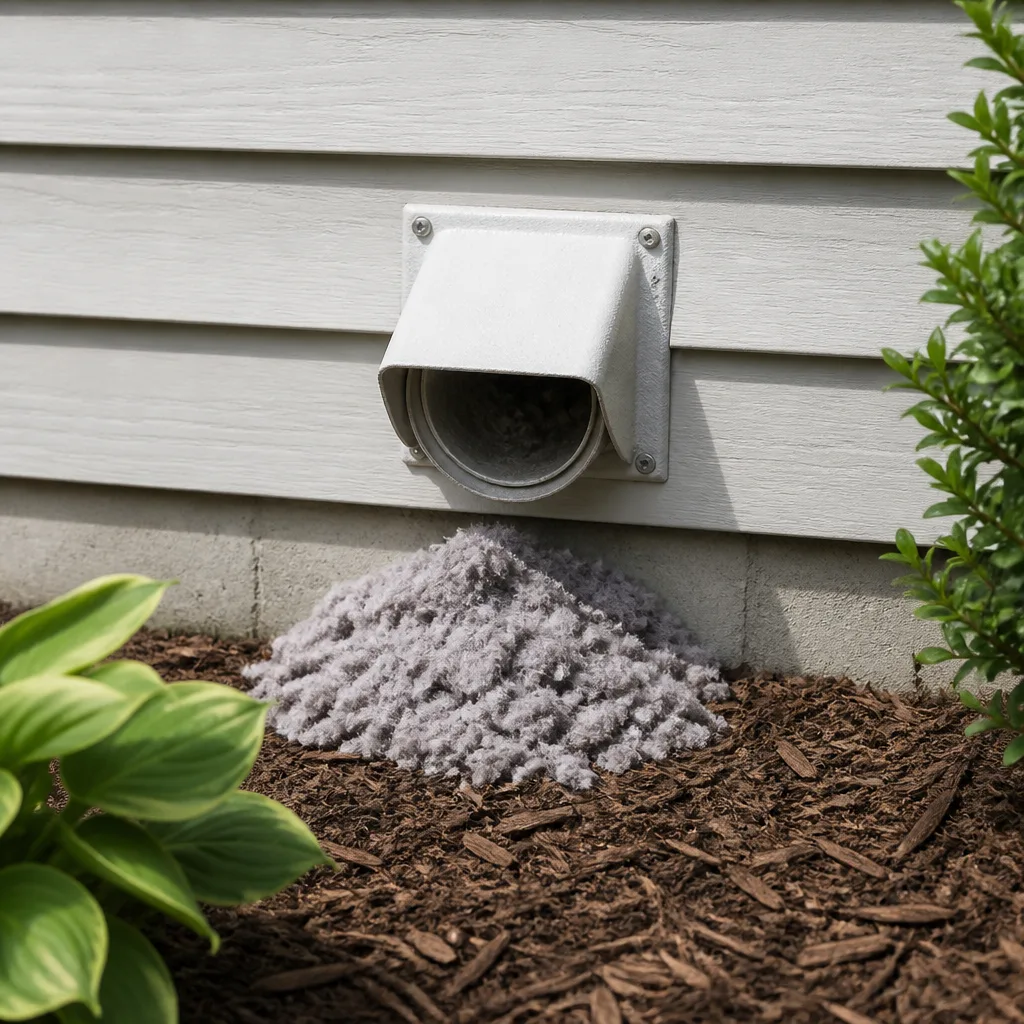 Dryer vent cleaning
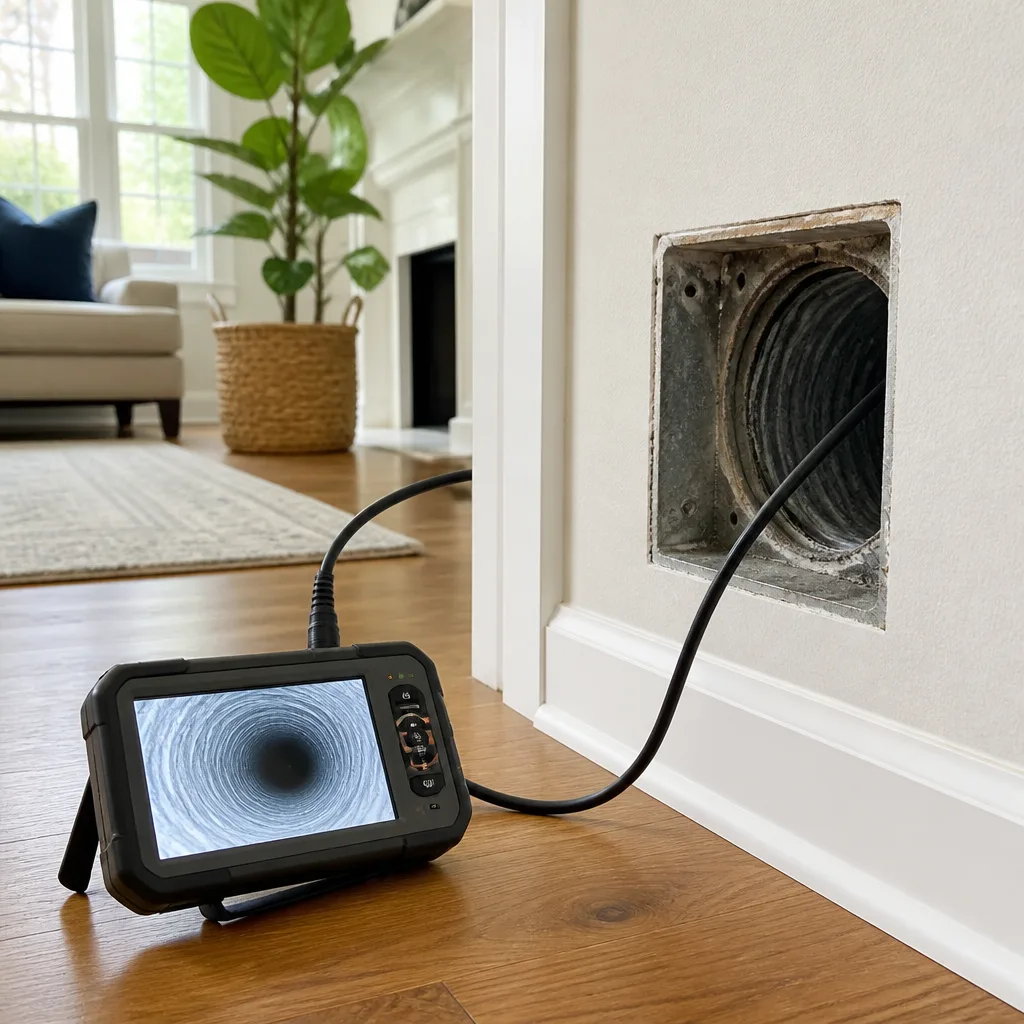 Camera inspection
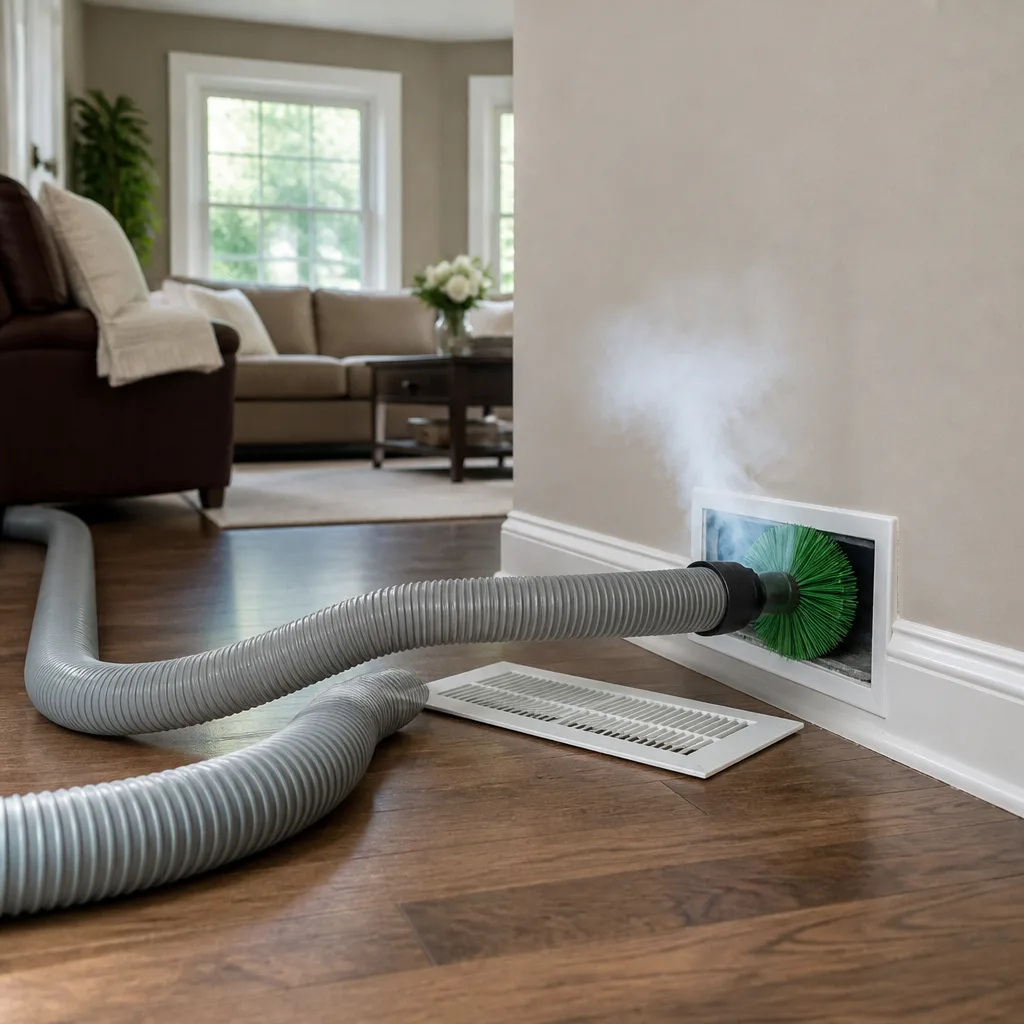 Sanitizing & deodorizing
Whole-system duct and dryer vent check with before-and-after photos - you see exactly what came out of your vents
That "$99 whole-house special" is a bait ad - the real number appears once they are in your hallway, or the "clean" is a shop-vac at the register. We photograph the inside of your ducts before and after instead.
Air Duct Cleaning Warning Signs: A La Jolla Homeowner’s Reference Guide
Here’s a statistic that should reframe how you think about duct cleaning: according to the National Air Duct Cleaners Association, the average six-room home generates roughly 40 pounds of dust per year. Most of that never reaches your registers. It settles in the return plenum, coats the blower wheel, and packs into the return-side ductwork where you’ll never see it. In La Jolla, where coastal air carries fine marine salts and dampness through open windows half the year, that dust does something else too: it binds. It cakes. It forms a film you can actually smell. This guide is not another list of vague warnings designed to sell you a cleaning. It’s a reference manual for telling the difference between normal accumulation and a real contamination problem, based on what we see inside La Jolla duct systems every week.
Styles & brands we work with
- Whole-home duct cleaning
- Dryer vent cleaning
- Camera inspection
- Sanitizing & deodorizing
Quick Answer
The air duct warning signs that genuinely justify cleaning in a La Jolla home are: dark oily film around supply registers (combustion byproduct or cooking grease), black spotting at duct seams (moisture-driven microbial growth), fibrous material blowing from vents (deteriorating duct liner), asymmetric airflow between rooms on the same zone (duct restriction or disconnection), and a musty odor that intensifies when the blower runs. Visible household dust alone is not a warning sign; it’s normal. If you’re seeing any of those five signals, call (866) 282-7507 for a professional assessment.
Table of Contents
- Five Register Observations Worth Acting On
- Odor Diagnostics: What Different Smells Actually Mean
- The $15 Static Pressure Check That Tells You More Than a Sales Pitch
- When Duct Cleaning Alone Won’t Solve the Problem
- Why La Jolla’s Climate Makes Duct Inspection Different
- Contractor Warning Signs: Legitimate Findings vs. Upsell Tactics
- What Actually Happens During a Professional Duct Cleaning
- Common Mistakes to Avoid
- When to Call a Professional
- Frequently Asked Questions
- The Bottom Line
Five Register Observations Worth Acting On
Every register in every home collects some dust. That’s not a problem; it’s physics. Air moves through the register, particles drop out of suspension as velocity drops, and they accumulate on the faceplate and adjacent wall. What separates normal dust from a warning sign is composition, pattern, and persistence. Here are the five specific observations that indicate something is happening inside your duct system that cleaning can actually address.
- Dark oily film around supply registers. This is not household dust. Household dust is gray, fibrous, and wipes away dry. An oily, dark residue that smears when you touch it, especially around kitchen-adjacent supply registers, indicates cooking oils and combustion byproducts have been pulled into the return side and baked onto duct surfaces by system heat. In homes where the kitchen exhaust was never properly ducted to the exterior, or where a gas range vents into the living space, this film accumulates quickly. It binds particulate, accelerates dust buildup, and creates a sticky substrate that degrades indoor air quality. This is one of the few signs that justifies source-removal cleaning with professional-grade agitation, not just a vacuum pass.
- White efflorescence or mineral deposits at register edges. In La Jolla’s marine layer, moisture is a constant variable. When you see a chalky white crust forming where the register meets drywall or on the duct boot itself, that’s mineral deposition from moisture evaporation. It means condensation is occurring inside or around the duct in that location. The source could be a poorly insulated duct run, a disconnected boot leaking conditioned air into a warm wall cavity, or elevated indoor humidity condensing on cool metal surfaces. Left unaddressed, this moisture becomes the starting condition for microbial growth.
- Black spotting at duct seams or around register interiors. This is the sign homeowners fear most, and for good reason. Black spots that follow seam lines, are concentrated where metal meets metal, or appear in a pattern consistent with moisture wicking are consistent with mold growth. Duct seams collect condensation first because they’re thermal bridges. In a La Jolla home where the system cycles heavily during summer humidity and sits idle through mild periods, these seams can stay damp for weeks. If the spots smear when wiped with a damp cloth, that’s surface dust. If they don’t move, or if they return within weeks of being cleaned, you’re dealing with microbial contamination that requires professional assessment of both the duct surfaces and the underlying moisture source.
- Fibrous material blowing from supply registers. Small gray or pinkish fibers accumulating on surfaces directly below supply registers indicate deteriorating duct liner or disintegrating flex duct material. Older duct board systems, common in La Jolla homes built in the 1970s through 1990s, use fiberglass lining that degrades over decades. When that lining begins to fail, it releases fibers into the airstream. This is not a cleaning-only scenario. You need the duct assessed for repair or replacement of the affected sections, which is why air duct repair in La Jolla is part of a complete response, not a separate project.
- Asymmetric airflow between rooms on the same zone. If one bedroom in your La Jolla home gets full-force air while an adjacent room on the same thermostat zone barely moves a tissue held to the register, you have a restriction or a failure in the duct run serving that room. Common causes include crushed flex duct, a disconnected branch line in the attic or crawl space, or a damper that’s been painted shut. Cleaning can remove accumulated debris that’s restricting airflow, but it won’t fix a physical disconnection. That requires inspection with the system running, which a professional service should do as a matter of routine.
These five observations share something important: they’re all verifiable. You can see them, photograph them, and describe them to a contractor. If someone is trying to sell you duct cleaning based on a claim you can’t verify with your own eyes, that’s a different conversation, and we’ll get to it later in this guide.
Odor Diagnostics: What Different Smells Actually Mean
Odor is the sensory signal most likely to trigger a duct cleaning call, and the one most commonly misdiagnosed. Your HVAC system is an odor concentrator. Any smell present in the home gets pulled into the return, cycled through the air handler, and redistributed through every register. But the character of the odor tells you whether the source is in the ducts, in the equipment, or in the living space itself.
Musty or earthy odor that intensifies when the blower runs
This is the smell most associated with biological growth in ductwork or in the condensate pan and evaporator coil. The key diagnostic detail is the intensification. If the smell is present when the system is off but gets noticeably stronger within 30 seconds of the blower starting, the source is inside the system, not the room. In La Jolla homes, we frequently find this in the condensate pan, where standing water in a dark, warm air handler creates the perfect environment for microbial growth. The odor then distributes through the entire supply run. Cleaning the ducts without addressing the source in the air handler leaves the smell intact.
Burning or electrical smell
A burning smell that appears when heat is running often indicates accumulated dust on the heat exchanger or on strip heaters in an air handler. This is common at the start of heating season, when dust that settled during months of cooling gets baked off by the first heat cycle. One-time dust burn-off is normal and resolves within an hour. A persistent burning or electrical smell that doesn’t resolve is a different issue entirely. It can indicate failing capacitors, overheating motors, or debris drawn into contact with hot surfaces. This is not a duct cleaning issue. It’s an equipment safety issue that requires HVAC service before any cleaning takes place.
Metallic or chemical odor
A sharp metallic odor can indicate corrosion activity inside metal ductwork, particularly in coastal environments where salt air accelerates oxidation. A chemical odor is usually traceable to something specific: off-gassing from recent renovations, pest treatment chemicals that entered the return ducting, or stored solvents and paints in a garage that shares the system. In either case, the duct system may be distributing the odor, but it didn’t generate it. If you recently refinished floors or treated for termites in your La Jolla home, the odor you’re smelling through the registers is distribution, not contamination. The fix is source control first, then cleaning to remove residual particulates from the duct surfaces.
What we actually smell when we open a system
After opening hundreds of La Jolla return plenums, here’s the plain truth: a healthy duct system smells like nothing. Slightly stale, maybe, but neutral. When we encounter the smells described above, we can usually trace them to a specific source within ten minutes of inspection: a dead rodent in the return chase, a failed vapor barrier, a condensate pan that hasn’t drained properly in months. The smell is a pointer, not a diagnosis. Anyone who quotes you a cleaning price based on odor alone, without establishing the source, is guessing.
The $15 Static Pressure Check That Tells You More Than a Sales Pitch
Here’s something most duct cleaning companies would prefer you didn’t know: you can measure the actual resistance of your duct system with a $15 manometer and about ten minutes of time. Static pressure tells you how hard your blower is working to push air through the system. High static pressure means restriction, collapse, or undersized ductwork. It’s a number, not an opinion, and it will tell you more about your system’s condition than any inspection narrative.
- Get a basic digital manometer with a static pressure probe kit. The $15 range covers single-port units that work fine for this purpose. You’re not buying lab equipment; you’re buying a baseline reading.
- Locate the supply and return plenums on your air handler or furnace. These are the large metal boxes where duct runs connect. You want to measure pressure in the supply plenum and in the return plenum separately.
- Drill a small access hole in each plenum using a 3/8-inch bit. Insert the probe, take a reading, and note it. The hole can be sealed afterward with a sheet-metal screw and a dab of silicone. This is the standard method HVAC technicians use.
- Interpret the readings. Total external static pressure is the sum of the positive supply reading and the negative return reading, ignoring the minus sign. Here’s the guide: under 0.5 inches of water column (in. WC) is excellent. 0.5 to 0.7 is acceptable for most residential systems. 0.7 to 0.9 indicates meaningful restriction. Above 1.0 means your blower is working against significant resistance, shortening equipment life and reducing efficiency. The filter accounts for part of this reading; test with a clean filter installed for a true baseline.
What does this tell you about duct cleaning? A reading that drops significantly after cleaning, particularly on the return side, confirms that accumulated debris was meaningfully restricting airflow. A reading that stays elevated after cleaning tells you the restriction is structural: collapsed flex duct, crushed duct runs from attic storage, or an undersized system. In La Jolla homes where attics are often shallow and duct runs are long, structural restriction is common. The static pressure reading tells you which problem you have before you spend money addressing the wrong one.
When Duct Cleaning Alone Won’t Solve the Problem
Here’s the conversation we have with La Jolla homeowners more often than any other: duct cleaning will fix what’s in the ducts. It won’t fix what’s wrong with the ducts. And it won’t fix what’s wrong with the house that caused the ducts to get dirty in the first place. Knowing the difference before you schedule service saves you money and disappointment.
- Disconnected or collapsed duct runs. In attic spaces where duct work has been displaced by storage, rodents, or poor initial installation, sections of flex duct can pull loose from boots or collapse under their own weight. Cleaning the interior of a collapsed duct doesn’t restore airflow. This requires repair or reconnection, which is why air duct repair capability matters in a single service call.
- Failed filtration. If the filter slot is bypassed, the filter doesn’t seat correctly, or the filter is the wrong size, particulates bypass filtration entirely and load the blower and coil directly. Cleaning the ducts without fixing the filter arrangement means the contamination returns within a year. In more than a few La Jolla homes, we find filter slots that have never had a correctly sized filter installed.
- Moisture intrusion from the building envelope. Leaky roofs, failed window flashing, rising damp in crawl spaces, and unvented bathroom exhaust all introduce moisture that condenses in duct runs. Cleaning removes the result of that moisture. It doesn’t remove the moisture. This is a building repair issue to be addressed by the appropriate contractor, ideally before cleaning so the problem doesn’t recur.
- Equipment problems. A failing blower motor or a heat exchanger with a crack is an equipment issue. The duct system may be dirty, but cleaning it won’t fix the equipment. If your HVAC technician flags equipment problems during seasonal maintenance, address those before scheduling duct cleaning.
- Interior contamination sources. Pets, smoking, frequent candle burning, and heavy cooking all load the air with particulate that ends up in the duct system. Cleaning removes what’s accumulated. The sources remain. You’ll get longer service life from a cleaning if these contributing factors are managed.
Why La Jolla’s Climate Makes Duct Inspection Different
La Jolla’s coastal environment creates specific conditions that affect duct systems differently than inland San Diego neighborhoods. Understanding these conditions helps you evaluate whether what you’re seeing is normal for this climate or a genuine problem.
The marine layer is the first variable. La Jolla sits directly in the path of coastal fog that rolls in during late spring and early summer, sometimes persisting through midday. This means outdoor air drawn through open windows and fresh-air intakes carries high humidity. When that humid air passes through cool duct runs, condensation forms on interior duct surfaces. In inland communities where the air is drier, this condensation evaporates quickly. In La Jolla, where the marine layer can hold humid air in place for weeks, those surfaces stay damp longer. That extended dampness is what accelerates microbial growth relative to inland systems.
Second is salt air. The same marine air that makes La Jolla’s climate so pleasant carries dissolved sea salt. That salt settles on duct surfaces, particularly in homes close to the water, and it’s hygroscopic, meaning it pulls moisture from the air. A salt-coated duct surface stays damp at humidity levels where clean metal would dry out. This is why we see corrosion on duct systems in coastal La Jolla homes that inland homeowners rarely encounter. The cleaning process for these systems is no different, but the recurrence interval may be shorter, and we may recommend additional filtration or dehumidification for homes in direct ocean-front exposure.
Third is the climate’s effect on system runtime. La Jolla’s mild temperatures mean HVAC systems run fewer hours per year than systems in the San Fernando Valley or Imperial County. Less runtime means fewer opportunities for the system to expel moisture through normal operation. The system sits idle through long periods, giving any accumulated moisture extended time to do its work. This is the opposite of what homeowners expect: a system that runs less often can actually develop contamination problems faster than one that runs constantly, because constant airflow helps dry the system.
Finally, there’s the matter of legacy housing stock. Much of La Jolla’s residential construction dates from the 1950s through the 1980s, which means original duct work that predates modern sealing standards. These systems were built before mastic-sealed joints and R-8 insulated flex duct became code. The result is running gaps at connections, weeping ducts in unconditioned spaces, and decades of accumulated material in systems that were never designed for easy access. A thorough professional air duct cleaning in La Jolla addresses accumulations that may be older than the person inspecting them.
Contractor Warning Signs: Legitimate Findings vs. Upsell Tactics
This section exists because we’ve seen what happens in the La Jolla market. The coastal ZIP codes attract aggressive duct cleaning marketers who know the customer profile: older homes, higher property values, and homeowners with the means to pay for service. That combination makes this market a target. Knowing which inspection findings are legitimate and which are scripts will protect you.
Legitimate findings during a duct inspection
- Measured airflow differentials between registers that correspond to specific complaints you’ve already noticed. A technician who identifies the same airflow problem you’ve observed is doing real inspection work.
- Photographic evidence from inside ducts. A push camera that shows actual contamination, damaged liner, disconnected sections, or biological growth. The photos should be of your system, taken during the inspection, and they should show something specific you can see and evaluate.
- Filter condition and fit. A technician who notes a bypassing filter or points out that the installed filter is the wrong size is identifying a real cause of contamination, not just selling a cleaning.
- Condensation or moisture evidence. Water staining at the air handler, rust on the blower housing, or dampness at supply boots are observable findings with implications for system performance and contamination.
- Specific odor source identification. If the technician locates and demonstrates the source of a smell, rather than simply confirming that it exists, that’s diagnostic work.
Common upsell tactics in the San Diego market
- The “visible dust” demonstration. A technician holds a white glove or dark cloth to a register, shows you the dust, and uses it as proof that your system is dangerously dirty. Every home with a functioning HVAC system will fail this test. It proves nothing.
- The alarm-tier mold claim. Some companies use moisture meters or air sampling with instant results that conveniently “confirm” mold whenever they’re used. True mold identification requires laboratory analysis. A visual assessment can identify probable microbial growth, but a ten-second instant test that always comes back positive is a sales tool.
- The arbitrary time-period claim. “If you haven’t had your ducts cleaned in five years, they need it.” The need for cleaning is determined by condition, not age. Some systems go 15 years without developing contamination; others need attention after 3. A time-based claim without condition-based evidence is a script.
- The package deal pressure. Sign today for a discount that expires when the technician leaves. Legitimate companies quote consistent pricing whether you decide in ten minutes or ten days.
- The unverifiable technical claim. Statements like “the EPA recommends duct cleaning every three years” or “the NADCA requires cleaning for health reasons.” Neither statement is true, and a technician who uses false authority to close a sale is not someone you want working inside your home.
The core principle is straightforward: a legitimate finding is specific, verifiable, and can be shown to you. A sales tactic is general, alarming, and requires you to trust the technician’s authority rather than your own observation. When we inspect a La Jolla home, the standard is simple: we show you what we see, we explain what it means, and you decide. No scripts.
What Actually Happens During a Professional Duct Cleaning
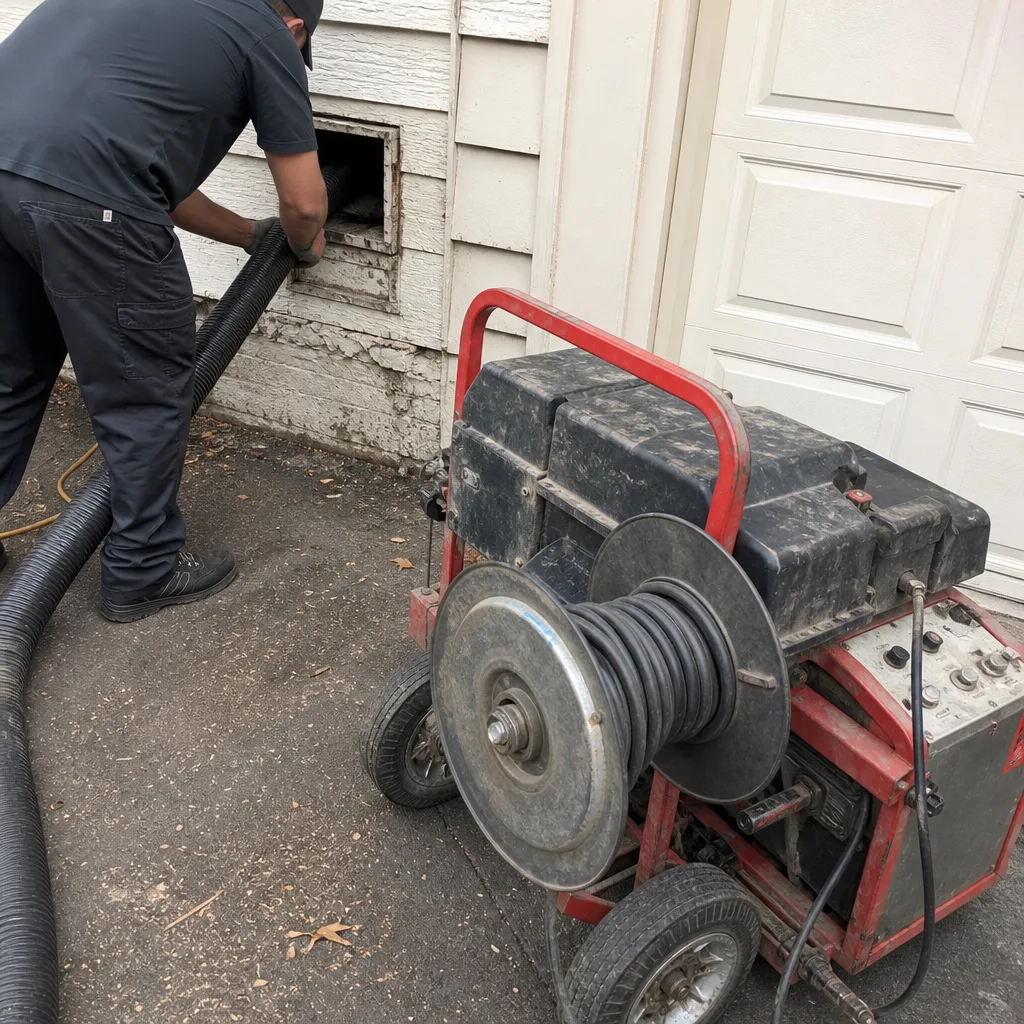
Knowing what equipment should appear in your driveway helps you evaluate whether you’re getting source-removal cleaning or a shop-vac performance. The distinction matters, because a poorly executed cleaning can make some problems worse by agitating debris and redistributing it through the living space.
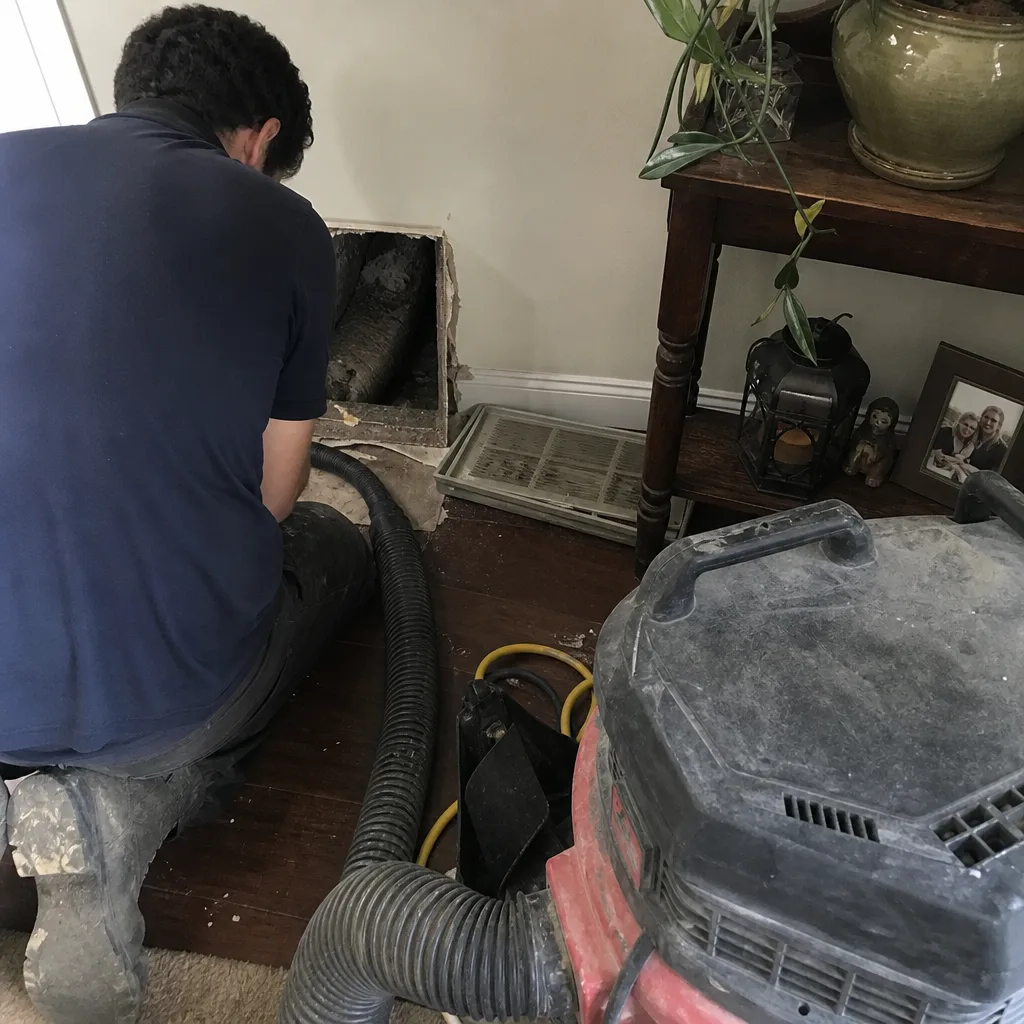
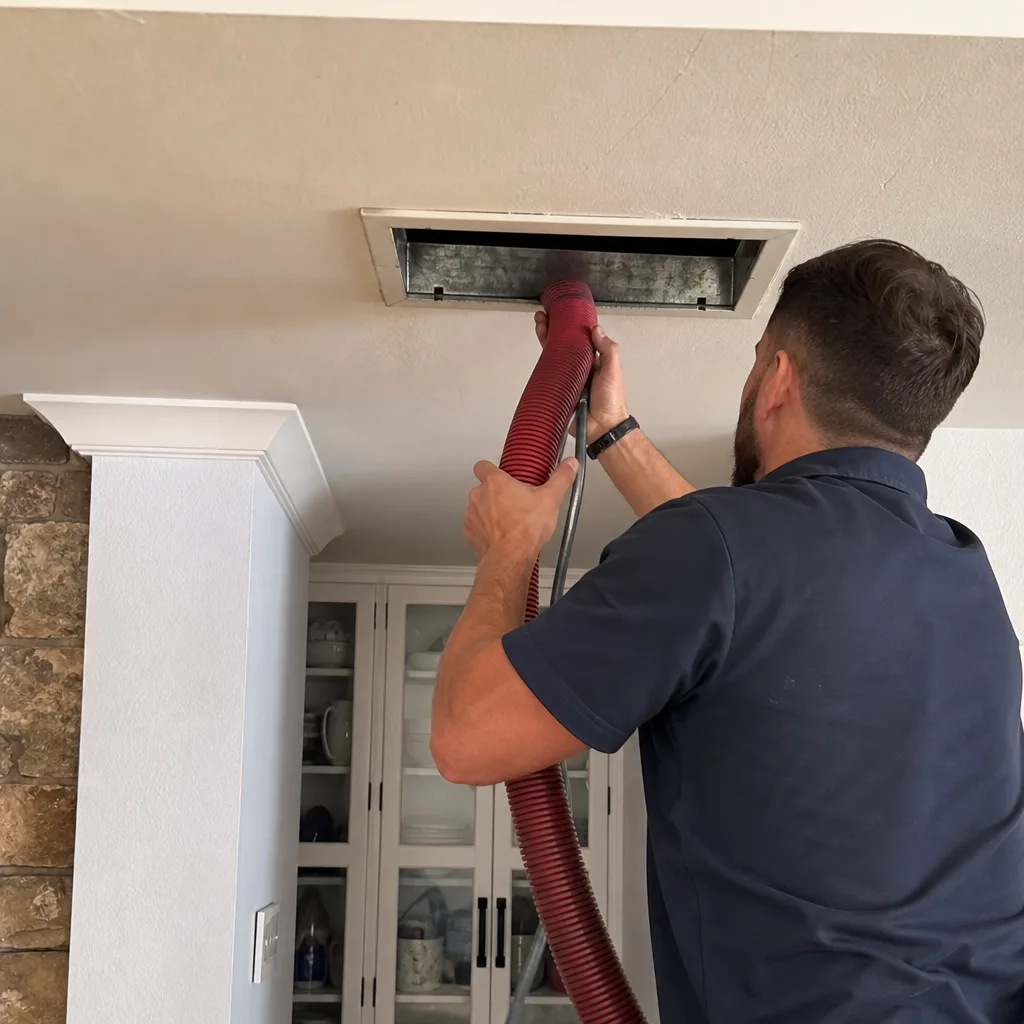
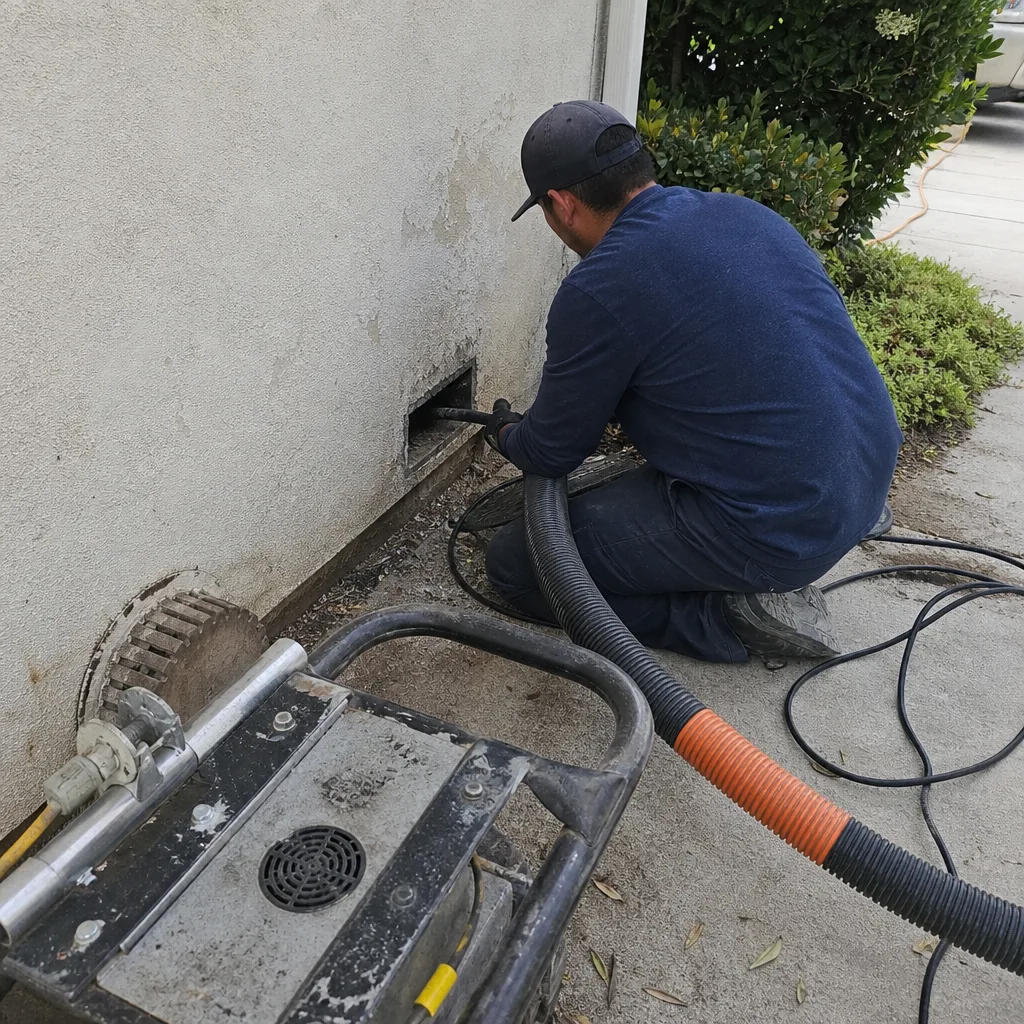
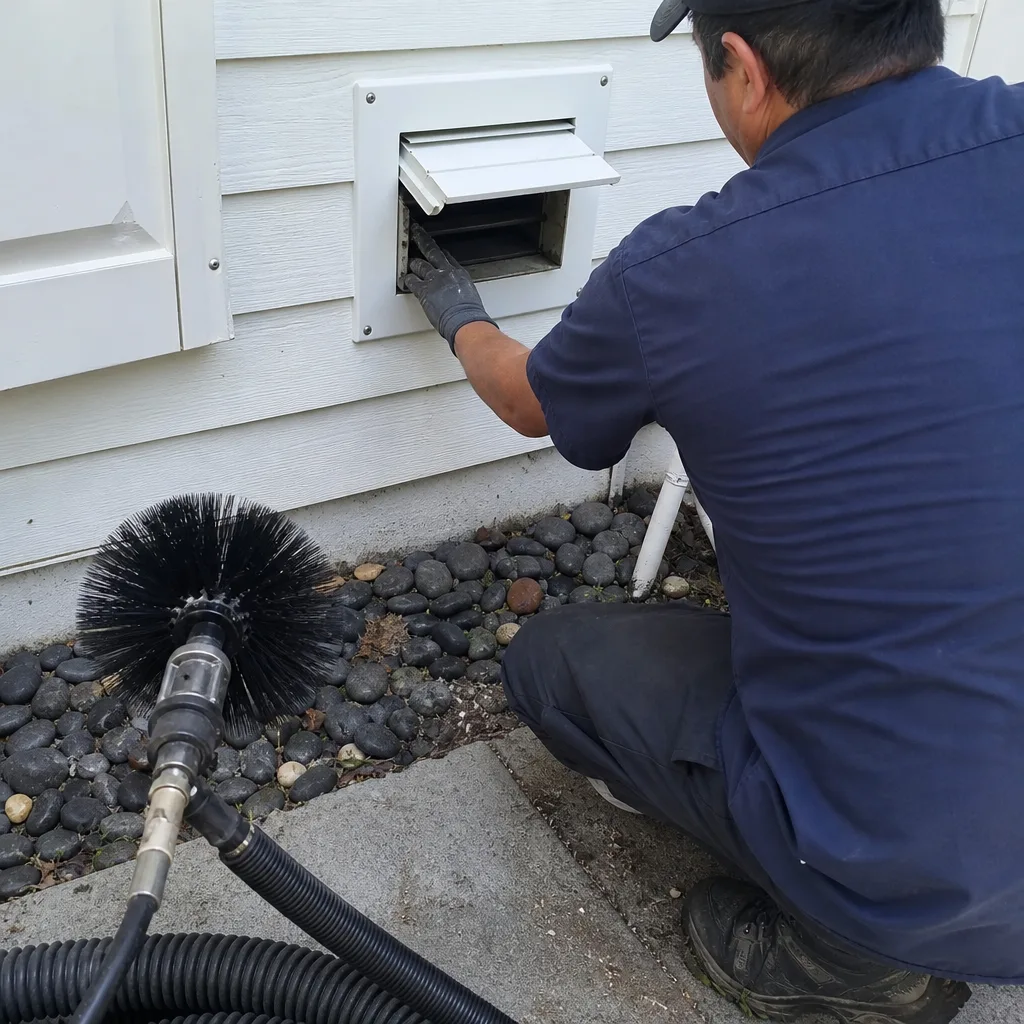
Professional source-removal cleaning requires agitation and extraction. Agitation is what separates material from duct surfaces. Extraction is what captures that material before it can escape into the home. Both require equipment specifically designed for the task. The Air Duct Cleaning La Jolla home standard uses rotary brush systems and pneumatic agitation tools built by manufacturers like Rotobrush and Nikro. These are the tool sets used by professional remediation contractors, not consumer-grade equipment adapted for duct work. The difference is visible in the results and in the photography we take inside the ducts during and after the work.
Containment is the other differentiator. When we clean, we use negative-air HEPA filtration equipment from Abatement Technologies to maintain the duct system under negative pressure. That means the dust and debris dislodged during agitation is captured by the extraction equipment, not pushed through the living space. In a La Jolla home with finished interiors and a family in residence, this matters. The cleaning should not make the house dustier than it was before the cleaning started.
A complete cleaning also includes component treatment. The return and supply plenums, the blower housing, the evaporator coil (if accessible), the register boots, and the registers themselves. Some companies clean only the main trunk line and call it complete service because it’s the easy part. The branch lines running to each room are where most of the airflow restriction and contamination actually accumulates. A proper job addresses the full system.
After cleaning, you should receive documentation: static pressure readings before and after, photographs of the interior before and after, and an honest assessment of what was found. If the technician recommends additional repairs, those recommendations should come with visual evidence and a straightforward explanation. And if the system includes Honeywell or Aprilaire filtration or IAQ components, we’re familiar with integrating them into the overall recommendation, because post-cleaning filtration is what protects the system from rapid recontamination.
Common Mistakes to Avoid
- Deciding to clean based solely on the years since the last visit. System condition, household factors, and symptom evidence matter far more than elapsed time. A system in a La Jolla home occupied by a single adult with no pets and good filtration may go a decade without meaningful accumulation. A system in a home with three large dogs, heavy cooking, and frequent open-window operation may need attention every two to three years.
- Testing for contamination before visually inspecting the system. Air sample tests are a tool for specific scenarios, not a replacement for looking inside the actual duct work. If someone sells you a mold concern without ever putting a camera in the supply duct, you’ve been sold a concern, not a diagnosis.
- Hiring a company that doesn’t show you the interior after cleaning. You should be able to see the result. Post-cleaning photography is standard practice for legitimate companies. If you can’t see the finished work, you have no way to verify the work happened.
- Assuming low price means good value. A $99 whole-home duct cleaning is not whole-home duct cleaning. It’s a purchase of a foot in the door, after which the upsell process begins. Legitimate cleaning of a full La Jolla home requires real equipment, real time, and real labor. Pricing that doesn’t reflect those costs isn’t buying you the same service.
- Ignoring persistent symptoms after cleaning. If the musty smell returns a month after cleaning, the cleaning didn’t address the source. Call the company back. Legitimate operations warrant their work and will return to determine what was missed.
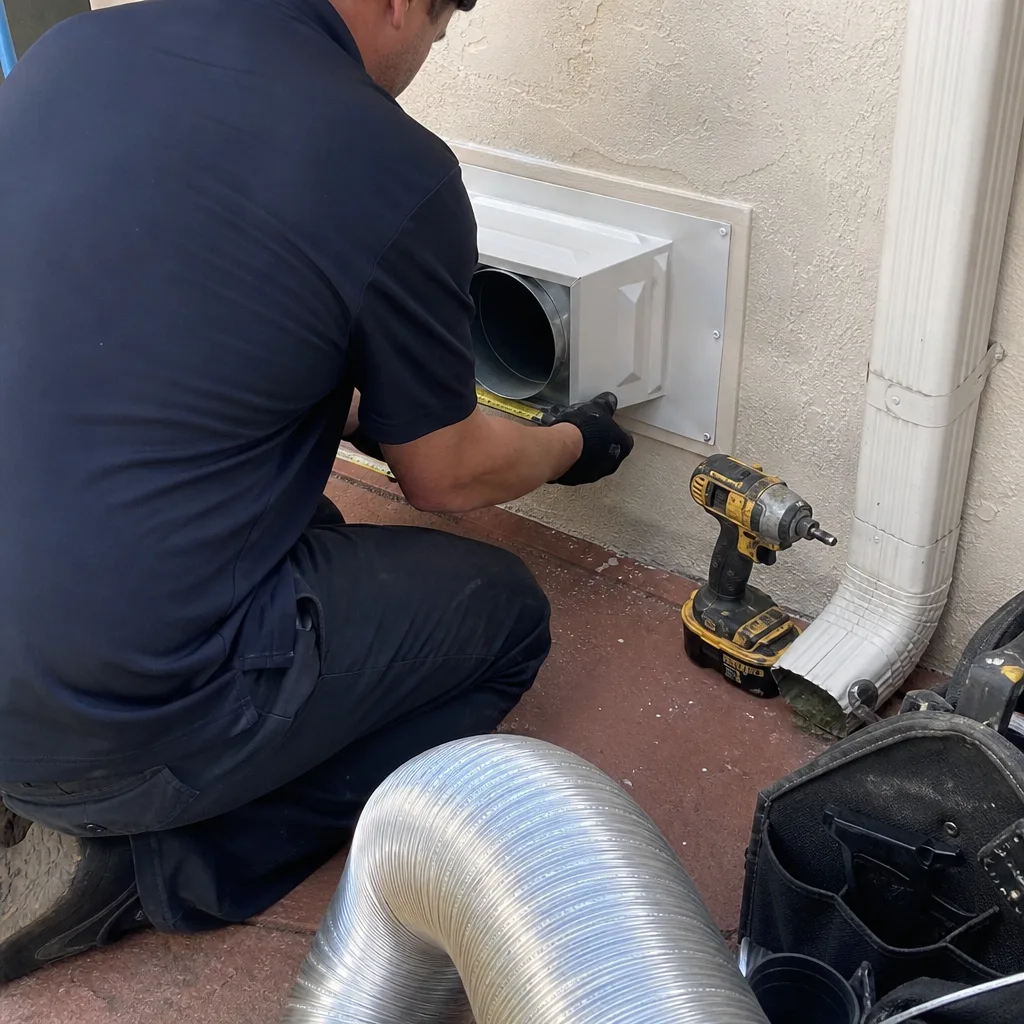
- Cleaning the ducts while ignoring the dryer vent. The dryer vent is a separate system with a separate failure mode, and it’s a documented fire risk. In our experience, La Jolla homeowners who address the HVAC system often overlook the dryer vent entirely. Dryer vent cleaning in La Jolla is a safety service that should be evaluated on its own schedule, separate from HVAC cleaning.
When to Call a Professional
You don’t need to diagnose a duct problem before calling someone. What you need is enough specific observation to evaluate whether the person you’re calling is giving you specific information in return. Call when you’ve observed any of the five register signs described earlier, when an odor persists through multiple days and cycles, when your static pressure reading indicates meaningful restriction, or when rooms on the same thermostat zone are delivering markedly different airflow. Air Duct Cleaning La Jolla offers free estimates throughout La Jolla with the equipment and documentation standards described in this guide. Call (866) 282-7507 to schedule an assessment, or to ask the questions this guide raised about your own system.
Frequently Asked Questions
Whole-home air duct cleaning in La Jolla typically ranges from $450 to $900 for a complete system, including all supply and return runs, the plenums, the blower housing, and register boots. Homes with extensive contamination, multiple systems, or unusual access challenges fall above that range. The defining variable is system size and complexity, not the number of vents counted individually. Call (866) 282-7507 for an exact quote based on your home’s configuration.
Because they’re not quoting the same service. A $99 whole-home duct cleaning is a lead-generation price designed to get a technician into your home, after which the real sales conversation begins. The price doesn’t cover the equipment, labor, or time required to perform actual source-removal cleaning. Some of these operations are legitimate businesses using aggressive pricing; many are commission-driven companies where the technician’s income depends on what they sell after arrival. When you compare quotes, compare scope, equipment, and documentation, not just the number.
You should receive before-and-after photography from inside your duct system showing the same locations cleaned. Push-camera images from the supply and return sides, taken at the same points before and after, are the standard. You should also receive static pressure readings showing the difference the cleaning made. If a company cannot provide either, you have no verifiable evidence that the work occurred. In our work in La Jolla, post-service documentation is part of the job, not an add-on.
Most homes benefit from professional cleaning every 3 to 7 years, with the interval determined by household factors rather than a fixed schedule. Homes with pets that shed heavily, occupants with respiratory concerns, recent renovation work, or water intrusion incidents fall at the shorter end. Homes with excellent filtration and minimal particulate sources can go longer. What matters most is condition, not calendar years. Address the system when you observe the warning signs described in this guide, not when a schedule says it’s time.
Microbial growth in duct work is a contamination issue that should be addressed, but it’s rarely the urgent medical threat that some marketing materials suggest. The concern is ongoing long-term exposure, not acute danger. What matters more than the presence of mold is the moisture source that enabled it, because cleaning mold from ducts without fixing the underlying moisture issue means recurrence is inevitable. A proper response includes source identification, cleaning with containment, and a plan to prevent the moisture from returning. In La Jolla homes, the source is frequently condensate management at the air handler or condensation in unconditioned attic spaces.
Duct cleaning removes accumulated particulate from the duct system itself, which can reduce the total particulate burden in the air your system circulates. It is not a cure for allergies, and no responsible company should claim otherwise. The larger factor for allergy sufferers is filtration: a high-quality media filter or electronic air cleaner installed and maintained properly does more for airborne allergen levels than duct cleaning alone. We work with Honeywell and Aprilaire filtration components and can recommend post-cleaning filtration improvements as part of a comprehensive IAQ approach.
The Bottom Line
Duct cleaning is not a scam, and it’s not a universal necessity. It’s a specific service with specific indications, and those indications are observable if you know what to look for. Dark oily register film, moisture staining, black spotting at seams, fibrous output, airflow asymmetry, and persistent odor with a system-linked pattern: these are the signals that justify professional attention. When the signals are present, hire a company that shows you evidence: before-and-after photographs, static pressure measurements, and equipment that demonstrates professional-grade capability. When they’re absent, save your money. A reputable company will tell you when cleaning isn’t needed. The air duct cleaning decision should be driven by observed condition, not by fear, calendar, or sales pressure.
Written by the team at Air Duct Cleaning La Jolla, serving La Jolla since 2018.
See the difference
 Before
 After
 Before
 After
 Before
 After