
Last updated November 2, 2026
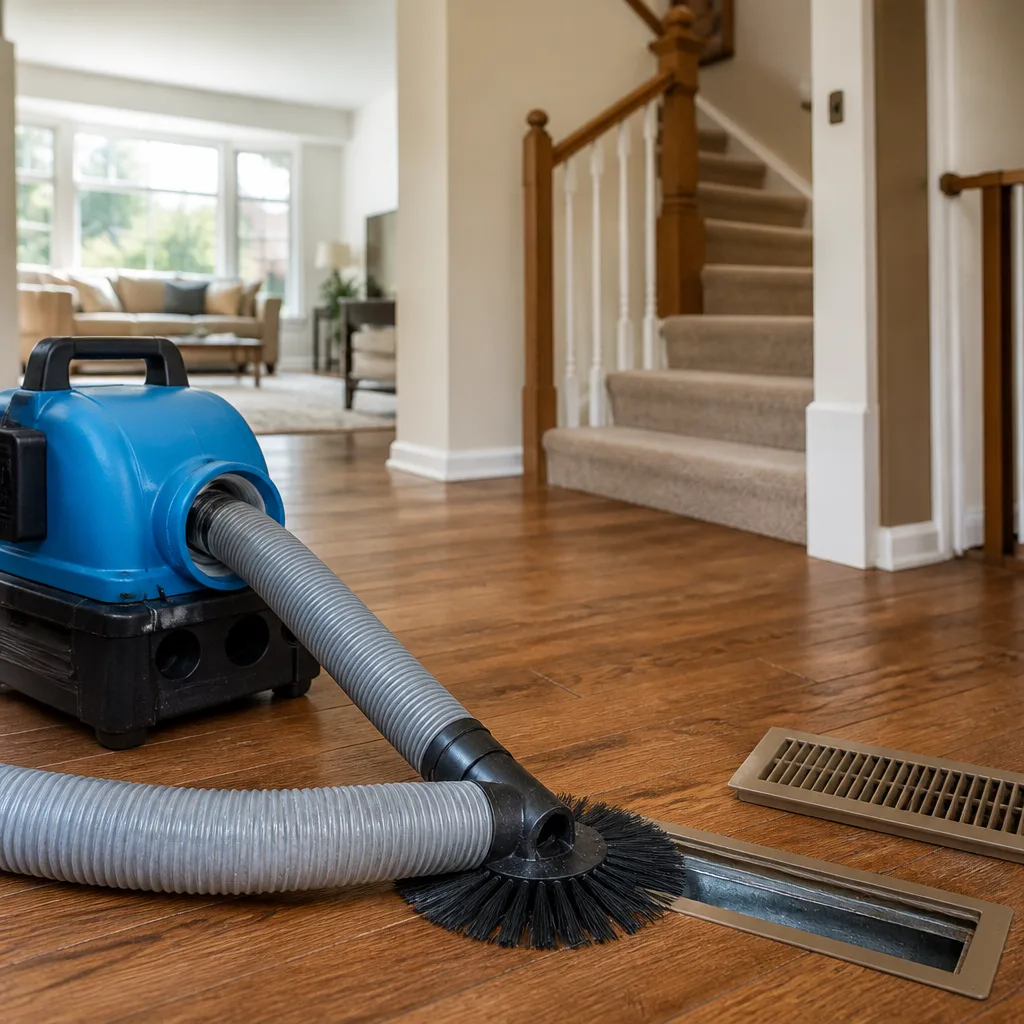 Whole-home duct cleaning
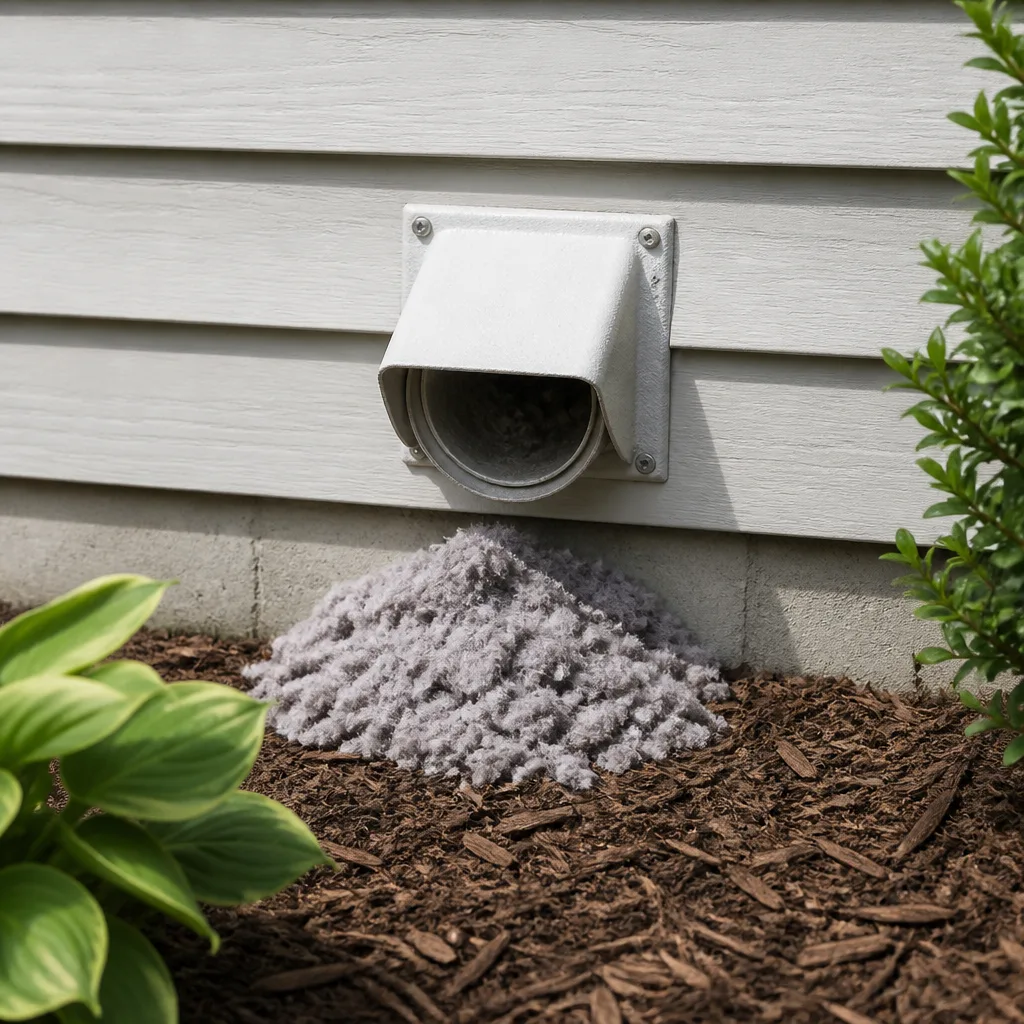 Dryer vent cleaning
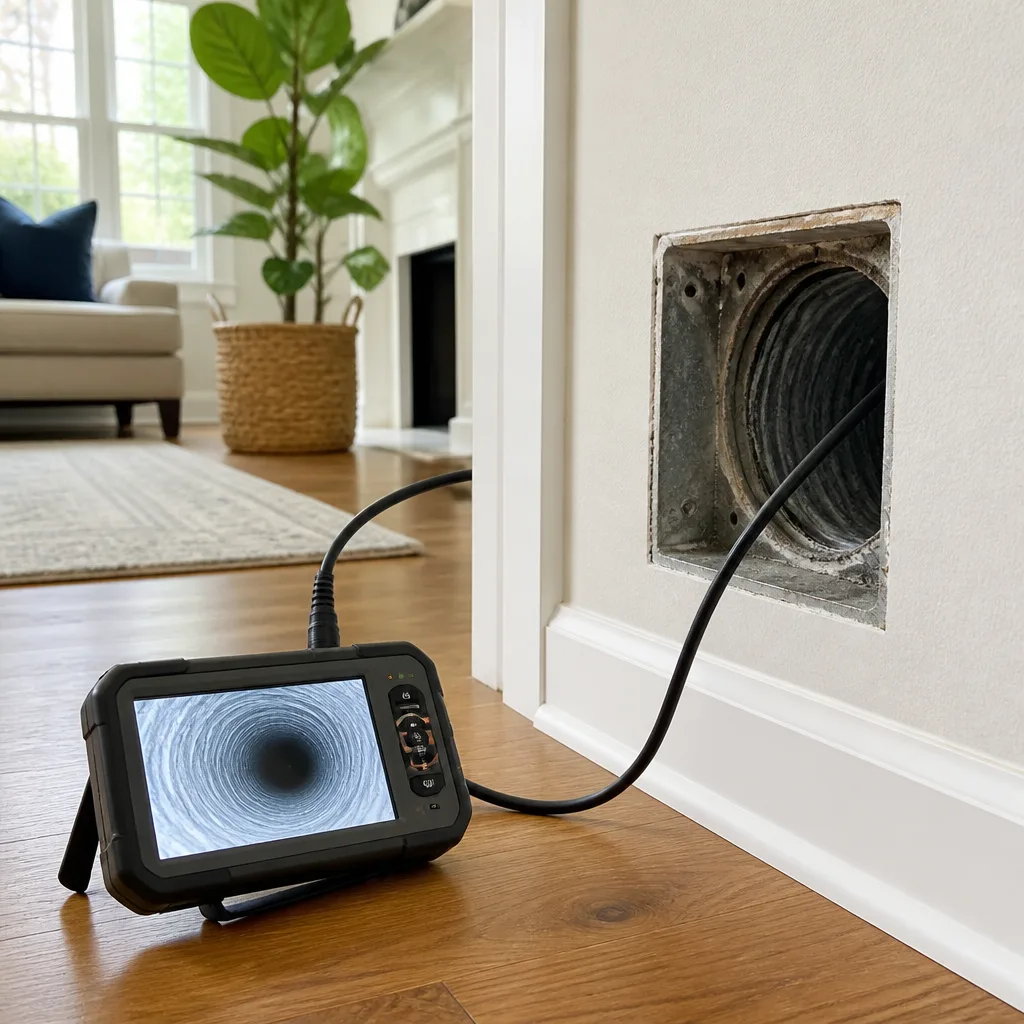 Camera inspection
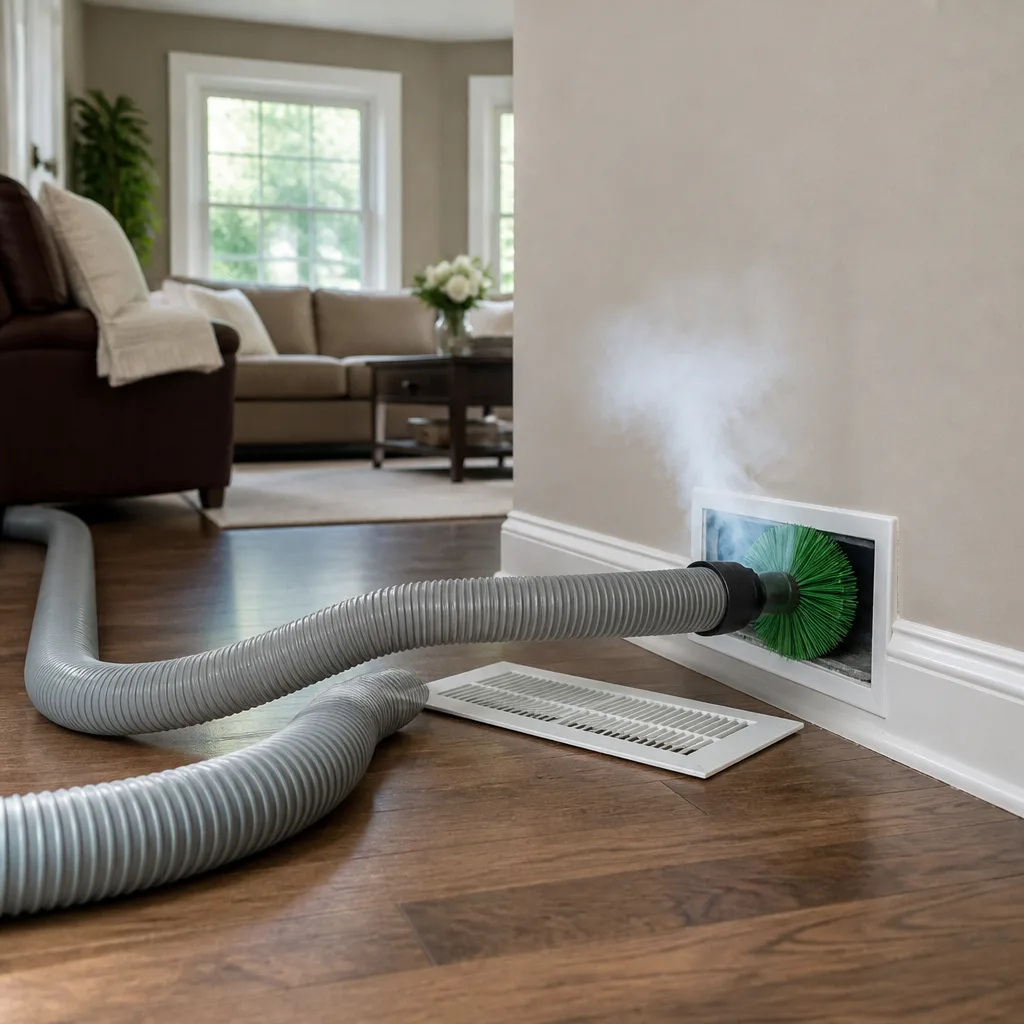 Sanitizing & deodorizing
Whole-system duct and dryer vent check with before-and-after photos - you see exactly what came out of your vents
That "$99 whole-house special" is a bait ad - the real number appears once they are in your hallway, or the "clean" is a shop-vac at the register. We photograph the inside of your ducts before and after instead.
DIY vs Professional Air Duct Cleaning: The La Jolla Homeowner’s Decision Guide
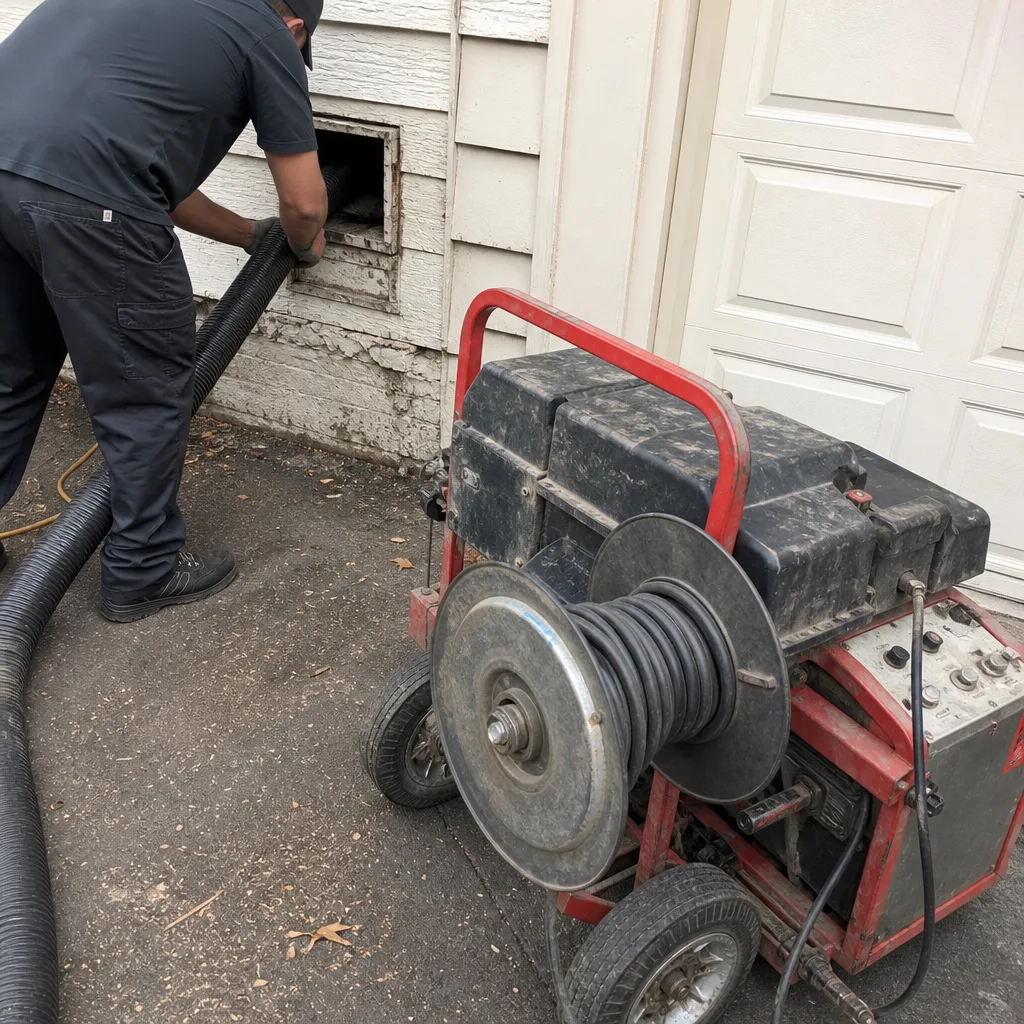
A Rotobrush system, the kind used in professional duct cleaning, combines a rotating brush inside the duct with simultaneous vacuum extraction through the same head. A homeowner with a dryer vent brush kit and a shop-vac is doing two separate, sequential things, which means agitated debris becomes airborne before it’s captured. That’s not a technique difference. It’s a physics difference. This guide will walk you through exactly what you can do yourself in your La Jolla home, what you should not attempt, and how to tell the difference before you spend money or make a mess.
Styles & brands we work with
- Whole-home duct cleaning
- Dryer vent cleaning
- Camera inspection
- Sanitizing & deodorizing
Quick Answer
DIY air duct cleaning can handle surface-level tasks like register cleaning, filter replacement, and accessible dryer vent clearing in La Jolla homes, but it cannot replicate the containment and airflow that professional negative-air machines produce. The decision comes down to what’s actually inside your ducts: if you’re dealing with light dust on accessible surfaces, DIY works. If you’re dealing with embedded debris, mold, rodent activity, or runs longer than about 10 feet, professional equipment is the only honest option.
Table of Contents
- What DIY Can Legitimately Accomplish
- Why Shop-Vacs Fall Short: The Airflow Math
- When DIY Backfires: Damage and Contamination Risks
- La Jolla-Specific Challenges: Coastal Homes and Long Duct Runs
- The Honest Cost Comparison
- Professional Tools, Explained: What Actually Happens During a Professional Cleaning
- Common Mistakes to Avoid
- When to Call a Professional
- Frequently Asked Questions
- The Bottom Line
What DIY Can Legitimately Accomplish
Let’s be clear about what a homeowner in La Jolla can actually do with off-the-shelf tools from any hardware store. Being honest about this matters because plenty of duct cleaning companies will tell you that everything requires a $600 service call. That’s not true either. There is a real, if narrow, band of work that a careful homeowner can handle.
Here’s what DIY duct work can genuinely address:
- Register and grille cleaning. Your floor, wall, or ceiling registers collect a film of dust and pet hair that never makes it into the duct itself. Removing them, washing them with warm water and mild detergent, and vacuuming the visible opening is legitimate maintenance. Most La Jolla homes have between 8 and 15 registers depending on square footage. Budget about two hours for a thorough job.
- Filter replacement. You should be replacing your HVAC filter every 60 to 90 days, more often if you live near the coast where salt air accelerates filter loading. If you run a Honeywell or Aprilaire media cabinet, you have a 4- to 6-inch filter that lasts 6 to 12 months. This is not just a suggestion. It’s the highest-impact indoor air quality action you can take that doesn’t require a contractor.
- Accessible dryer vent clearing. If your dryer is on an exterior wall and the vent run is under 6 feet with no turns, a dryer vent brush kit from the hardware store will clear it. We’ll say more about this below, but for short runs, this is real, effective work.
- Visual inspection. Your phone camera is a genuinely useful diagnostic tool. Remove a register, turn on the flash, and record a slow pan of the first 2 to 3 feet of duct. You’ll see dust accumulation, signs of moisture, or evidence of rodent activity. This tells you whether you need professional help and gives you documentation if you do.
Realistic tool list for the DIY scope:
- Screwdriver or drill for register removal
- Shop-vac with HEPA-rated filter (standard filter just blows fine dust back into the room)
- Dryer vent brush kit, extendable, typically 12 to 20 feet
- Phone camera or a cheap USB inspection camera
- Replacement HVAC filter, correctly sized
- Microfiber cloths and mild cleaning solution
That’s a real list for real work. Total cost: roughly $75 to $150 depending on what you already own. Total time for a first pass: half a day. But note what’s not on that list: any way to clean more than 3 feet past the register opening, any way to capture dislodged debris inside the duct itself, and any way to clean the return side of the system beyond what you can reach from the grille.
If you’re handling this level of maintenance and want a broader understanding of what professional Air Duct Cleaning in La Jolla involves when the time comes, we’ve written about the full scope elsewhere. For now, the key line is this: DIY ends where the duct turns.
Why Shop-Vacs Fall Short: The Airflow Math
The core physical problem with consumer vacuum equipment is not power. It’s airflow volume, measured in cubic feet per minute, or CFM. A good shop-vac can pull 150 to 200 CFM through a 2.5-inch hose. That sounds like a lot until you understand what happens inside a duct that’s 8, 10, or 12 inches in diameter.
CFM is about moving air, not about the speed of that air. When you attach a 2.5-inch vacuum hose to the opening of a 10-inch duct, the vacuum’s airflow is dispersed across the entire cross-section of the duct. The air speed inside that duct drops dramatically, because the same volume of air is now moving through a much larger space. Air speed is what carries debris to the vacuum. At the air handler, which can be 15, 25, or even 40 feet from the register in a larger La Jolla home, the air movement created by a shop-vac is nearly zero. You are not cleaning that duct. You are cleaning the first few feet of it.
Professional negative-air machines solve this problem differently. An Abatement Technologies negative-air unit doesn’t push air through a small hose. It connects to the duct system and pulls air through the entire run, often at 2,000 CFM or more. That level of airflow maintains meaningful air speed even in a 12-inch duct, which means debris at the far end of a long run actually moves toward the collection point. This is the same class of machine used in mold remediation and asbestos abatement, where the failure to capture airborne particles is not an option.
Duct diameter matters more than most people realize. A 6-inch duct run in a condo or a small apartment retains more air speed from a shop-vac than a 10-inch run in a single-family house. If you live in a La Jolla condo with short, narrow duct runs, your DIY efforts will be more effective than the same effort in a 4,000-square-foot house with 12-inch trunks and long branch lines. The house geometry does as much to determine the answer as the tool does.
The second issue is capture. When a professional cleaning happens, a rotating brush inside the duct is agitating debris at the same moment the negative-air machine is pulling that debris out. The agitation and the capture happen in the same second, in the same location. When you brush a duct by hand and then vacuum it, the agitated dust has time to settle back onto the duct surface or, worse, to float into the living space through the open register. You’ve redistributed the problem rather than solved it. This is why the equipment on our trucks matters: Rotobrush systems were built to make agitation and extraction simultaneous, and that simultaneous action is the entire difference between source removal and moving dirt around.
For a broader look at how professional cleaning fits into an overall home maintenance plan, our Air Duct Cleaning La Jolla home page covers what a full service actually includes and how to evaluate different approaches.
When DIY Backfires: Damage and Contamination Risks
Not all DIY duct work is harmless. Some of it makes the eventual professional cleaning harder, more expensive, or both. We’ve seen these specific failures enough times in La Jolla homes that we can describe them precisely.
Compressed debris pushed deeper into runs. This is the most common outcome of an aggressive DIY attempt. The homeowner inserts a stiff brush or a rag on a rod into the duct, pushes forward, and effectively sweeps debris toward the air handler instead of toward the register opening. That compressed material then sits in the middle of a run or at a bend, where it’s harder to reach with professional equipment that would have extracted it cleanly on the first pass. It’s the physical equivalent of pushing crumbs under the refrigerator and then asking a cleaner to retrieve them. The professional will still get them, but it takes longer.
Damaged flex duct. Flex duct, the accordion-style insulated tubing used extensively in La Jolla homes built after the 1970s, has an inner liner that’s surprisingly fragile. A brush head that snags on the inner surface can tear it. Once the liner is torn, conditioned air leaks into unconditioned space, and the duct starts pulling insulation fibers and attic air into your supply stream. Repairing flex duct requires cutting out the damaged section and replacing it, which is exactly the kind of work we handle through our Air Duct Repair in La Jolla service. The irony is that a homeowner trying to save $400 on cleaning can cause $600 in repair work with a $30 brush kit.
Disturbed insulation in lined ducts. Some older homes, particularly ones built before flex duct became standard, have rigid metal ducts lined with fiberglass insulation. That insulation is held in place by its own structure, and it’s not designed to withstand scraping from a brush. Agitate it enough and insulation fibers end up in the air stream, which is a problem that did not exist before the DIY attempt. A professional cleaning with the right equipment can handle lined ducts carefully. The wrong tool in untrained hands cannot.
Moisture introduction. La Jolla’s coastal air already carries more moisture than inland air. Homeowners who introduce water to the cleaning process, whether by wetting a cloth or using a moisture-based cleaning product, create the exact conditions mold needs in a duct system. Duct interiors should stay dry. Full stop.
The pattern here is consistent: the failures happen when a tool designed for one job is used on another. No homeowner would use a kitchen sponge to wash a car and expect good results, but the duct-cleaning equivalent happens constantly.
La Jolla-Specific Challenges: Coastal Homes and Long Duct Runs
La Jolla is not one housing market. It’s several, stacked on top of each other, and the housing stock varies dramatically by neighborhood. The Bird Rock bungalow, the Muirlands estate, the UTC-adjacent condo, and the Mount Soledad view property all present different duct-cleaning scenarios, and the DIY calculus changes with each one.
Homes in the older sections of La Jolla, including the Village and Bird Rock, frequently sit on raised foundations. That means the duct system runs through a crawl space rather than an attic, and those runs are often longer and more convoluted than attic runs because they have to navigate around foundation piers and beams. Crawl-space duct runs in coastal soil conditions also tend to have more moisture exposure than attic runs, which means the debris inside them is more likely to be damp, compacted, and difficult to remove with any consumer-grade tool. A shop-vac is struggling with dry dust. It is utterly hopeless against damp, compacted material at the far end of a 30-foot crawl-space run.
Coastal air also changes the character of duct debris. Homes within a mile or two of the water in La Jolla accumulate a fine, slightly sticky mixture of normal household dust and marine aerosol, which contains salt particles. That’s not a dramatic health issue, but it does mean debris clings to duct surfaces more than it does in inland homes, and it responds differently to mechanical agitation. This is another reason the agitation-plus-simultaneous-capture method matters in coastal homes specifically.
Newer construction in La Jolla, particularly infill development and the condo buildings near La Jolla Village and along La Jolla Parkway, tends to have shorter, straighter duct runs and more accessible mechanical rooms. A homeowner in one of those units can do more with a shop-vac than a homeowner in a 1960s Bird Rock house with a crawler foundation and original metal ducts. Geography and construction era are as important as tool choice in the DIY decision.
One more local consideration: rental and HOAized properties. If you’re in a condo with a homeowners association, your CC&Rs may actually specify who is responsible for duct maintenance in shared walls and common returns. Before you open any access panel, know what’s yours and what’s the association’s. We’ve seen La Jolla condo owners spend a weekend working on a return chase that they weren’t authorized to open in the first place.
The Honest Cost Comparison
Let’s get specific about money, because the DIY calculation has to include both the tooling cost and the opportunity cost of your time, and professional cleaning has to be priced against realistic outcomes rather than a coupon pitch.
DIY tooling cost, real-world La Jolla scenario:
- Shop-vac with HEPA filter: $90 to $180 depending on model. A standard 5-gallon unit with a HEPA filter and a 2.5-inch hose runs about $140 at big-box pricing.
- Dryer vent brush kit, 12-foot: $25 to $40
- USB inspection camera: $30 to $60 for a basic 16-foot unit that pairs with a phone
- Replacement filter: $15 to $40 for a 1-inch fiberglass or pleated filter depending on size and MERV rating. A Honeywell popup is more expensive than a generic, but still an owner-maintained item.
- Miscellaneous: screwdriver, cleaning cloths, gloves, mask: essentially whatever you already own
Total realistic DIY investment for a first pass: $200 to $350, including at least one trip to the hardware store. Time commitment: 4 to 6 hours for a first-time, careful job covering registers, filter, and a short dryer vent run.
Professional cleaning cost in the La Jolla market:
Whole-system air duct cleaning in La Jolla runs $350 to $650 for a typical single-family home of 2,000 to 3,000 square feet, with multi-story homes and homes with inaccessible runs trending higher. This is not a per-vent price, a teaser figure, or a bid that requires a technician to “find problems” before the final number is set. It’s the whole-system price, documented by before-and-after photography of your actual ducts, including the runs you can’t reach with a phone camera. Dryer vent cleaning runs $100 to $200. Air duct repair is priced per job, and we cover that scope on our Air Duct Cleaning services page.
Here’s the calculation most people miss: the DIY path is not free. It’s a $200 to $350 equipment purchase that buys you the ability to clean the first 3 feet of each run, replace a filter, and clear a short dryer vent. That’s real value, and for a homeowner who wants to handle ongoing maintenance, it pays for itself in one or two uses. But it does not buy a full-system cleaning, and pretending otherwise is how you end up with the compressed-debris problem described above.
The realistic comparison table:
- DIY: registers clean, first 3 feet of each run visually improved, filter replaced, short dryer vent cleared. Cost: $200-$350 and half a day. Full-system condition: unchanged.
- Professional: full duct runs cleaned to source, return side included, containment-grade filtration during work, before-and-after photo documentation, repair recommendations. Cost: $350-$650 for the cleaning. Full-system condition: actually cleaned.
If your goal is maintenance, DIY is a reasonable choice. If your goal is a clean system, the cost difference between a serious DIY attempt and a professional cleaning is roughly $200 to $350, and the outcome difference is a clean first three feet versus a clean full system. That’s the honest math, and it’s why we tell La Jolla homeowners to do the maintenance themselves and hire the source-removal work.
And because this matters: when you call for a professional cleaning, you should know the price before the van arrives. A flat whole-system price, agreed before work starts, is the only structure that protects you from the classic duct-cleaning upsell. Ask for it. If the company won’t give you one, call someone else.
Professional Tools, Explained: What Actually Happens During a Professional Cleaning
The decision between DIY and professional cleaning becomes much easier when you understand what professional equipment actually does. Most homeowners have never seen the inside of a duct cleaning rig, and confusing marketing language doesn’t help. Here’s the plain-language version.
A professional cleaning in a typical La Jolla home works like this:
- System inspection. A technician opens the supply plenum or an access point near the air handler and evaluates the system’s size, configuration, and condition. This is where damaged flex duct, loose connections, or moisture evidence gets identified. If repair work is warranted, it may be done during the same visit rather than through a second contractor, which matters when the issue is inside an inaccessible chase.
- Containment setup. The negative-air unit is connected to the duct system, typically at the air handler, and the system is sealed so that air pulled through the ducts passes through HEPA filtration before it’s exhausted. This is what Abatement Technologies negative-air machines are built for, and it’s the same containment principle used in mold remediation. The point is simple: dislodged debris goes into the machine’s filter bank, not into your living room.
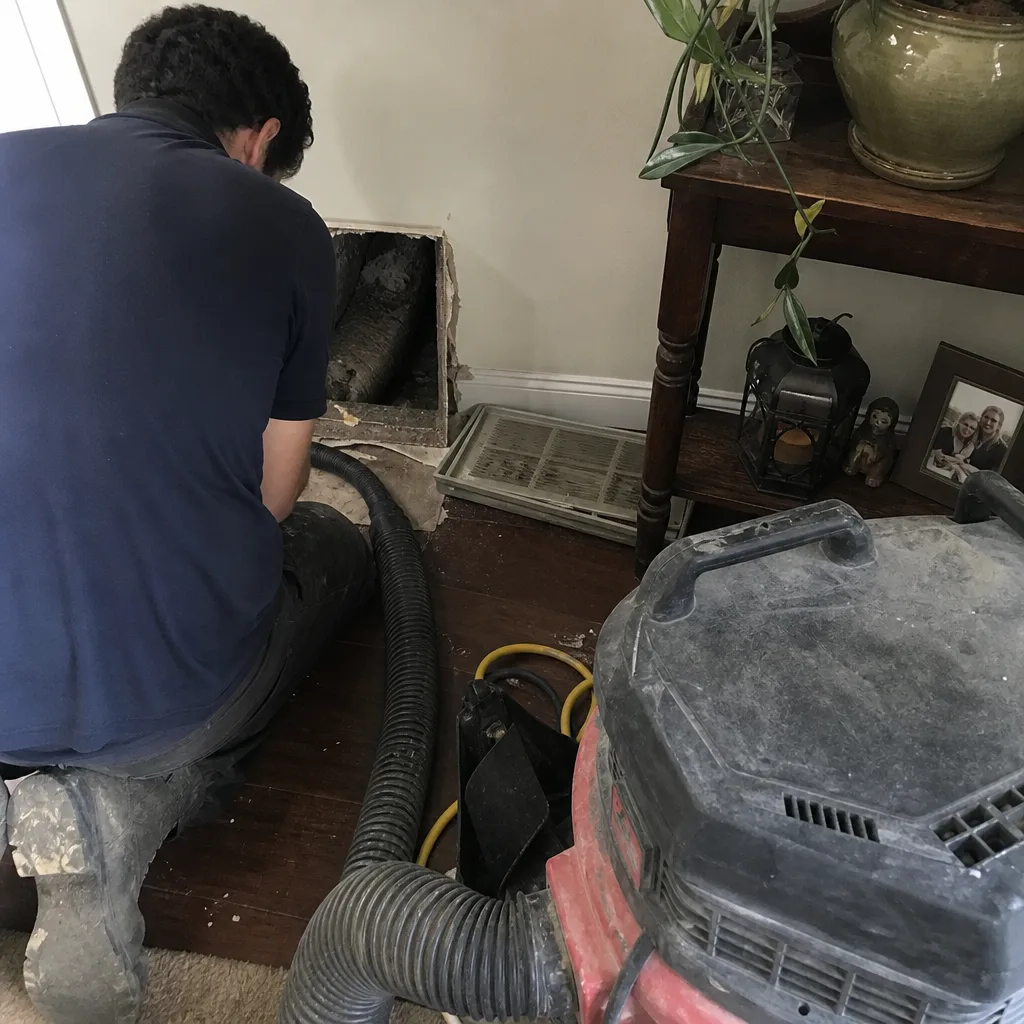
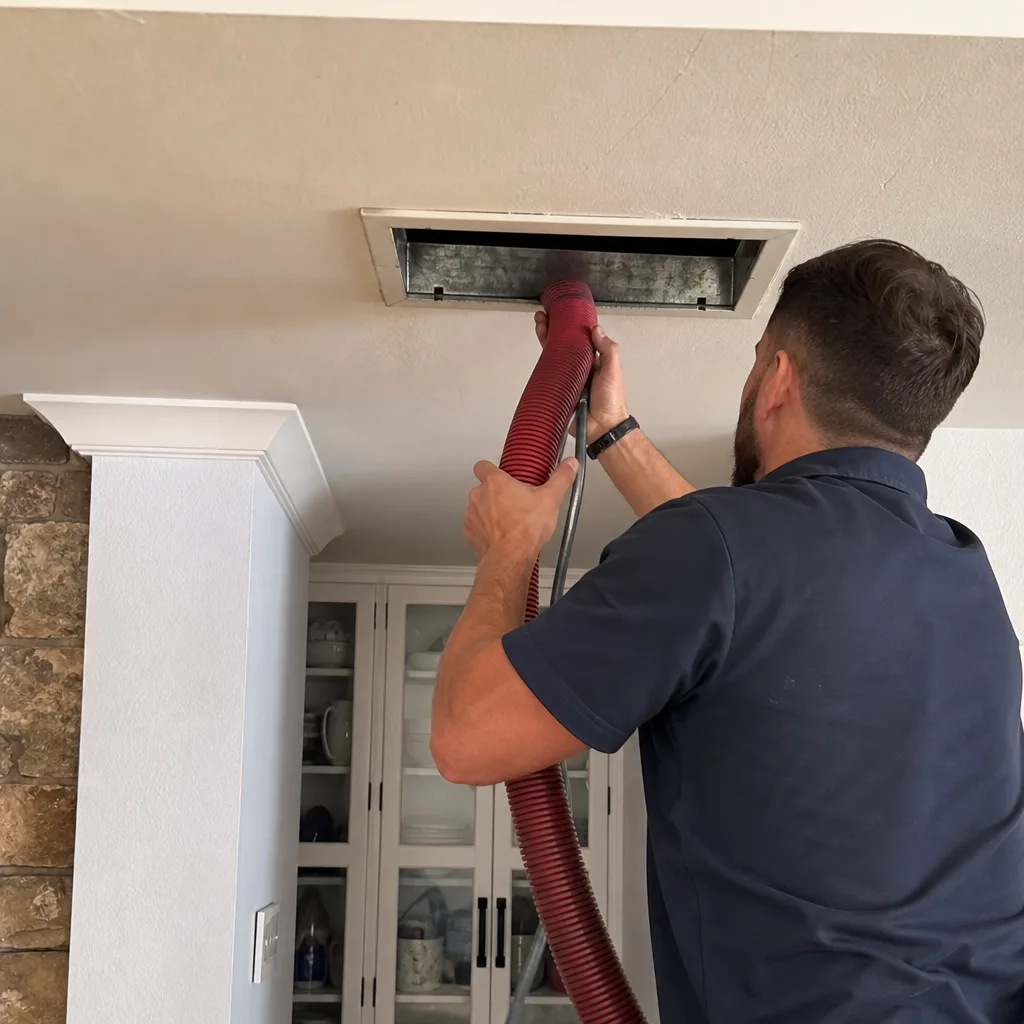
- Source-removal cleaning of each run. Each supply run and the return side are cleaned with a rotating brush system, typically a Rotobrush for residential-scale ducting, paired with the negative-air machine. The brush dislodges debris from the duct walls at the same moment the negative-air airflow carries it toward the collection point. Agitation and extraction happen together, which is the mechanical difference between professional cleaning and every DIY method.
- Verification and documentation. Before-and-after photos are taken inside the duct system, the registers are replaced, and the system is restored to operating condition. You should see evidence of what was actually cleaned, not just a receipt.
This is not a vacuum cleaner attached to a hose. A Rotobrush head doesn’t just sit at the register opening and hope for the best. It travels the full length of the run, agitating and extracting continuously. A Nikro negative-air unit doesn’t just filter the exhaust air; it creates system-wide airflow that makes the extraction work. The difference between this and a shop-vac is not incremental. It’s the difference between a leaf blower and a hurricane-rated exhaust fan. Different machines, different physics, different outcome.
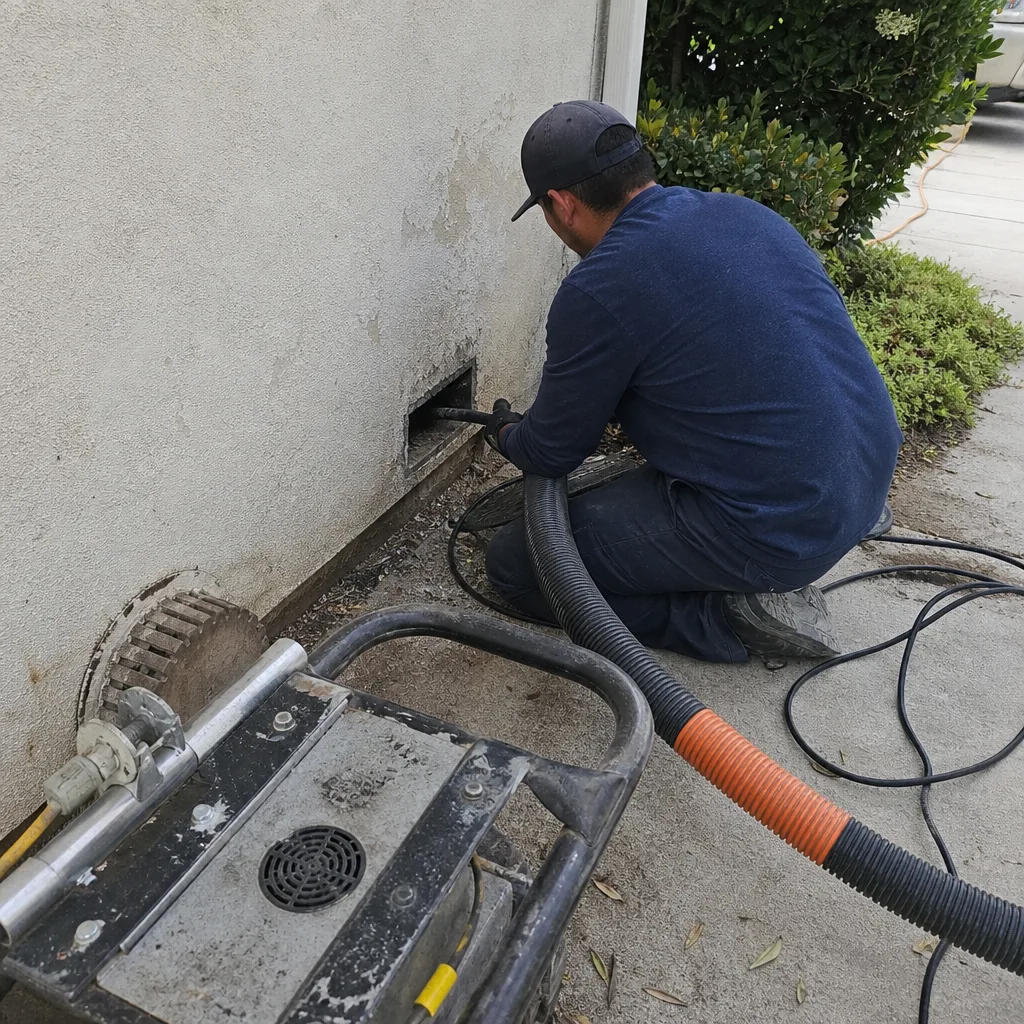
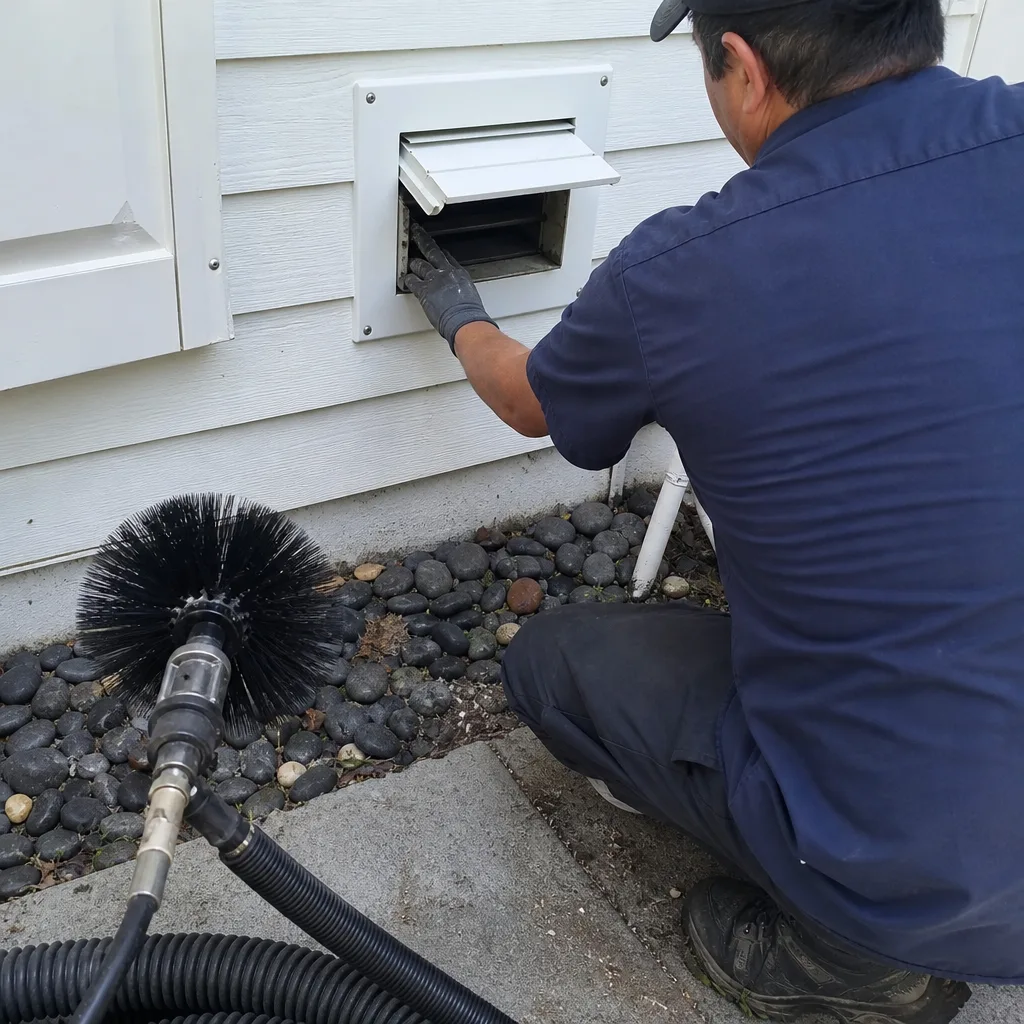
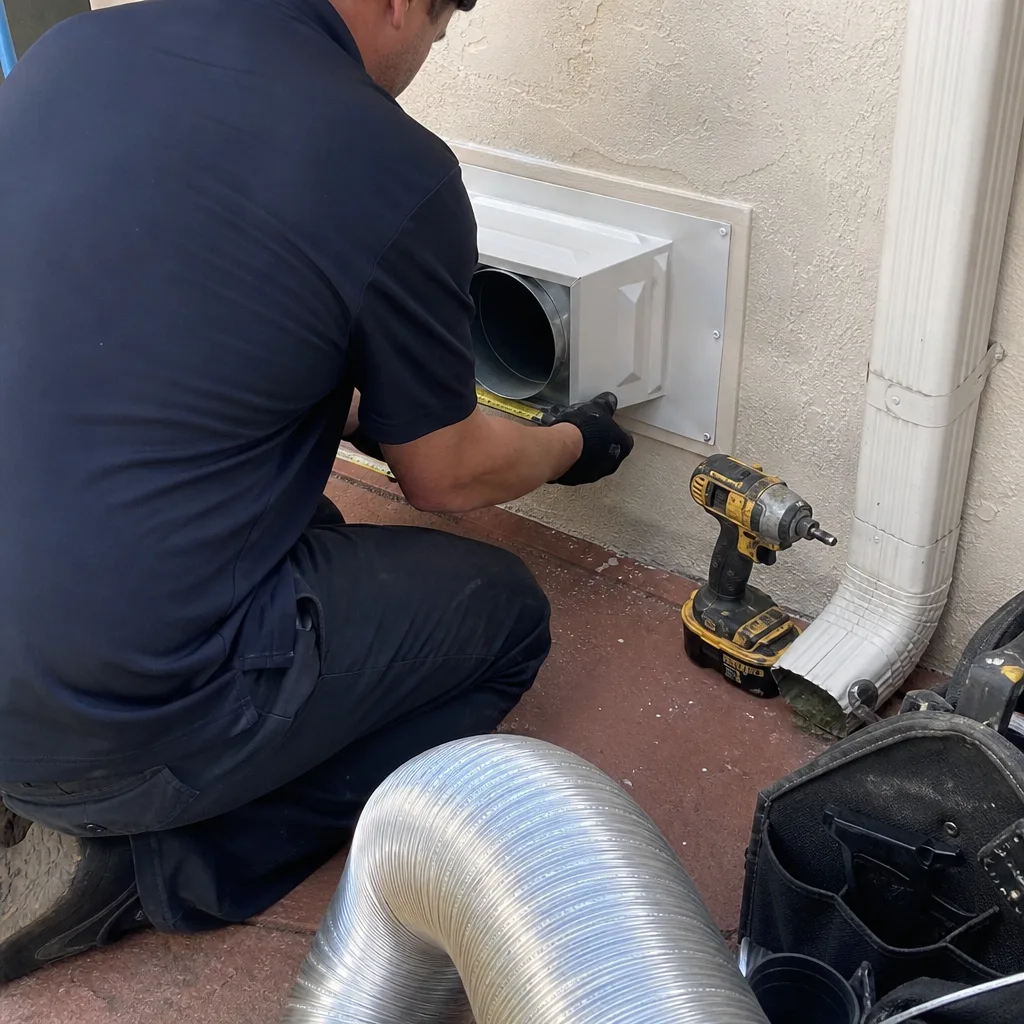
For La Jolla homeowners who want to understand where Dryer Vent Cleaning in La Jolla fits into the same picture, the principle is identical: a long vent run with bends defeats consumer tools, and professional equipment removes the lint load with documented results. Lint is not just a nuisance; it’s the most common cause of dryer fires, and a partially cleared vent can still hold enough lint to support one.
Common Mistakes to Avoid
- Buying a “duct cleaning” kit from an online marketplace and expecting professional results. These kits are typically a brush and a rod, no vacuum at all. They dislodge debris into the air stream, which moves it deeper into the system or into the room. The kit doesn’t clean the duct. It relocates debris from the walls of the duct to another inconvenient place.
- Using a standard shop-vac filter instead of a HEPA filter. A standard filter lets the fine dust pass straight through the vacuum and back into the room as an invisible plume. If you’re going to vacuum dust, the filter is the part doing the actual work. Buy the right one.
- Pushing debris toward the air handler. The air handler is the mechanical heart of your system, and it’s the last place you want dust and debris entering. DIY brushing should always work from the farthest point inward toward the register opening, not the other way.
- Using moisture in any form inside a duct. Duct interiors have to stay dry, especially in La Jolla where the ambient air already carries humidity. Water plus dust equals a paste that adheres to duct walls and creates conditions for mold. Never introduce water.
- Ignoring the return side. The return side of your system carries air from your living spaces back to the air handler, and it’s typically as dirty as the supply side. DIY efforts almost always skip it because access panels are harder to reach. If you’re doing DIY work, at least inspect the return you can see.
- Confusing a visual improvement for a clean system. Clean registers and a fresh filter improve the look of the visible parts of your system, but they don’t change the condition of 90% of the duct surface area. It’s fine to do that work, but don’t conclude you’ve cleaned the ducts. You’ve cleaned the visible openings.
- Attempting to DIY a situation that will become a repair. If you see visible moisture staining, rodent droppings, or mold growth in a duct, DIY is not the answer. You’re dealing with a remediation or repair situation, not a cleaning situation. The wrong attempt makes it worse.
When to Call a Professional
Call in a professional when you have evidence of rodent activity in the ducts, visible mold growth, moisture damage, or unexplained respiratory symptoms among household members that track with time spent indoors. These are contamination issues, not cleaning issues, and they require containment-grade equipment that prevents the contaminant from being spread through the living space during the work. Call in a professional if your duct runs are long, numerous, or inaccessible, which describes most single-family homes in La Jolla and particularly those with raised foundations in the Village and Bird Rock. For help choosing the right company, read our guide on How to Hire an Air Duct Cleaning Contractor in La Jolla: A Step-by-Step Guide. Call in a professional if you’ve already attempted a DIY cleaning and are now noticing debris exiting the registers, which usually means an unmanaged agitator pushed material into the airstream. Air Duct Cleaning La Jolla offers free estimates in La Jolla: call (866) 282-7507 and we’ll inspect your system and tell you what’s actually there before any work is scheduled.
Frequently Asked Questions
Professional air duct cleaning in La Jolla typically costs $350 to $650 for a whole system in a 2,000 to 3,000-square-foot single-family home, with larger homes and homes with inaccessible runs priced higher. Any company quoting a per-vent price is setting you up for a bill that grows once the technician arrives. Call (866) 282-7507 for a flat whole-system price before work is scheduled.
DIY is worth it for regular maintenance tasks: register cleaning, filter replacement, and clearing short, straight dryer vent runs under 6 feet long. It is not worth it as a substitute for whole-system cleaning, because consumer vacuums cannot generate enough airflow to clean runs longer than a few feet or to capture debris at the air handler.
Coastal homes in La Jolla should have their air ducts evaluated every 3 to 5 years, with the actual cleaning cycle driven by the result of the visual inspection. See our Seasonal Air Duct Cleaning Care for La Jolla: Year-Round Homeowner’s Guide for timing recommendations. Salt air, marine layer moisture, and older raised-foundation construction all contribute to faster debris accumulation than in inland homes. A filter on a regular change schedule reduces the need for frequent cleaning.
No. A leaf blower creates enormous airflow, which sounds useful, but it does not filter or contain any of the debris it dislodges. You would be blowing years of accumulated dust, pollen, and dander out of every register and into the living spaces of your La Jolla home at high velocity. The result is not clean ducts. It is a hazmat event in your living room.
Cheaper duct cleaning quotes usually reflect lower equipment costs and a different method, often a simple vacuum at the register with no rotating brush and no negative-air containment. The job gets sold on price and then expanded once the technician arrives. A legitimate whole-system cleaning uses professional equipment and comes with one flat price agreed in advance. Call (866) 282-7507 for a quote with no per-vent pricing.
The standard is before-and-after photographs taken inside the duct system. Ask any company you’re considering whether they provide photo documentation of the actual runs cleaned. If the answer is vague, find another company. Documentation is the only evidence that a system was actually cleaned rather than partially vacuumed at the registers.
Yes. The dryer vent is a separate run from the HVAC system, which means cleaning the air ducts does not clean the dryer vent. And the dryer vent is the more urgent safety issue, since lint accumulation is a primary cause of dryer fires in La Jolla homes. Our Dryer Vent Cleaning in La Jolla service covers the full vent run, including runs that exit on a roof or through a long interior wall.
The Bottom Line
The DIY-versus-professional question has a precise answer for La Jolla homeowners: DIY for maintenance, professional for source-removal cleaning. You can clean registers, replace filters, clear short dryer vents, and inspect accessible duct openings with off-the-shelf tools. You cannot clean a full duct system with a shop-vac, and attempting it often creates a repair bill that exceeds the cost of professional cleaning. The equipment that makes professional cleaning work, rotary brush systems paired with negative-air containment, is not available at any hardware store for a reason. If you want to know what’s actually inside your ducts, or you want a flat price for a whole-system cleaning, call us at (866) 282-7507. For more guides & resources, visit our blog. We’ll inspect the system, show you what we find, and give you an honest recommendation before any work starts.
Written by the team at Air Duct Cleaning La Jolla, serving La Jolla since 2018.
See the difference
 Before
 After
 Before
 After
 Before
 After